


Steve McQueen & Porsche 917 #20: Iconic Gulf Le Mans Racing Legacy
Quick answer: In the 1971 film Le Mans, Steve McQueen immortalized the Porsche 917K #20 dressed in John Wyer Automotive Engineering's powder-blue and marigold-orange Gulf Oil livery. Powered by a 4.5-liter air-cooled flat-12 engine producing 580 horsepower, chassis 917-022 and sister car 917-004 raced at over 240 mph down the Mulsanne Straight, turning the #20 roundel into the most recognizable color scheme in endurance racing history.
Few actors ever belonged in a real pit lane. Steve McQueen did. Months before cameras rolled at Circuit de la Sarthe in June 1970, McQueen drove a Porsche 908/02 spyder at the 12 Hours of Sebring with a cast on his broken left foot. He and co-driver Peter Revson finished second overall, just 23 seconds behind Mario Andretti's Ferrari 512S. That result was no Hollywood stunt.
When McQueen's production company, Solar Productions, arrived in France to shoot the 1971 feature film Le Mans, he wanted real race speeds, real rain on the windshield, and real prototypes from the 1970 World Sportscar Championship. At the center of the story stood one car: the Porsche 917K #20 in Gulf powder blue and marigold orange. Today, that color combination inspires our Gulf Le Mans custom racing collection and remains a benchmark of 24 Hours of Le Mans heritage.

Why Steve McQueen's Porsche 917 #20 Defined Endurance Racing History
When Ferdinand Piech spearheaded the Porsche 917 project in late 1968 to exploit the FIA's 25-car Group 4 homologation rule, early drivers feared the car. The original 1969 long-tail body generated perilous lift over crests at 230 mph. Everything changed during an October 1969 test at Zeltweg when John Wyer's chief engineer John Horsman and driver Brian Redman taped aluminum sheets onto the rear deck, creating the truncated 917K (Kurzheck) tail.
Planted at high speed, the 917K gave Porsche its first overall Le Mans victory in June 1970 with Hans Herrmann and Richard Attwood in the red-and-white Salzburg #23. Right alongside them, John Wyer's Gulf-sponsored team fielded three powder-blue and orange 917Ks: #20 (Jo Siffert and Brian Redman), #21 (Pedro Rodriguez and Leo Kinnunen), and #22 (David Hobbs and Mike Hailwood).
Although Jo Siffert led much of the opening afternoon in the real #20 before an over-revved engine ended its race in hour twelve, Solar Productions used chassis 917-022 and 917-016 after the race to film McQueen's fictional character, Michael Delaney, battling Ferrari's 512S through the night.

How Solar Productions Filmed the 1970 24 Hours of Le Mans at 200+ MPH
No CGI existed in 1970. Nobody sped up film frames in post-production either. To capture live race footage during the actual 1970 24 Hours of Le Mans, Solar Productions entered McQueen's own Sebring Porsche 908/02 (#29), painted in Gulf blue and driven by Herbert Linge and Jonathan Williams. Three heavy Arriflex 35mm movie cameras were bolted onto its nose and tail housing.
Linge and Williams ran the full 24 hours, stopping in the pits to let technicians swap 400-foot film magazines Alongside tire and fuel changes. They crossed the finish line 9th overall, though theACO left them unclassified because camera stops exceeded the maximum time limit. After June 14, McQueen kept a roster of real Le Mans drivers on payroll for four months, including Derek Bell, Jo Siffert, Brian Redman, and David Piper, staging wheel-to-wheel battles between Porsche 917Ks and Ferrari 512s down Maison Blanche.

Porsche 917K #20 Technical Specifications and Livery Breakdown
Why does the Gulf #20 livery work so well both on fiberglass bodywork and on modern motorsport apparel? In 1967, Gulf Oil vice president Grady Davis rejected standard dark corporate navy because it looked muddy on European overcast tracks and black-and-white television broadcasts. Instead, Gulf acquired Wilshire Oil in California and adopted Wilshire's bright powder blue (Pantone 290C equivalent) paired with high-visibility marigold orange (Pantone 151C equivalent), separated by a crisp dark-navy pinstripe.
| Specification / Attribute | 1970 Porsche 917K #20 (John Wyer / Solar Productions) | Kozmozcyber #20 Gulf Tribute Apparel |
|---|---|---|
| Primary Chassis Numbers | 917-004 (1970 race entry) & 917-022 (hero movie car) | Custom-numbered #20 or personalised driver number & name |
| Engine & Output | Type 912 4.5L & 4.9L air-cooled 180-degree flat-12 (580 to 600 bhp) | All-over HD dye-sublimation print on 230 GSM poly-spandex pique |
| Curb Weight & Construction | 800 kg tubular aluminum spaceframe with fiberglass body | Breathable polo, sherpa-collar quarter-zip, and quilted race jacket |
| 1970 Le Mans Drivers | Jo Siffert & Brian Redman (Race) / Steve McQueen as Michael Delaney (Film) | Unisex sizes S to 5XL with optional custom chest/back print |
| Color Palette | Zenith Powder Blue, Marigold Center Stripe, White #20 Roundel | Colorfast fiber-infused ink that never cracks or peels in cold wash |

How Fans Wear the #20 Gulf Le Mans Aesthetic Today
Walk through the paddock at the Le Mans Classic, Goodwood Revival, or any Formula 1 weekend and you will spot the powder-blue and orange #20 within five minutes. In August 2017, chassis 917-024, which served as a test and movie car before being owned by Jo Siffert, sold at Gooding & Company's Pebble Beach auction for $14,080,000. You do not need fourteen million dollars to bring that 1970 aesthetic to a race watch party or karting meet.
Our independent design team builds tribute garments inspired by the 1970 Gulf Le Mans grid across breathable summer polos, cold-weather quarter-zip pullovers, and track-day suits. Every shirt in our custom racing polo collection and quarter-zip pullover range is printed prior to cutting so the marigold center stripe aligns cleanly across the zipper and collar seams.
Featured #20 Gulf Le Mans Tribute Gear

Steve McQueen #20 917 Gulf Le Mans Custom Polo Shirt
230 GSM moisture-wicking pique with optional custom name & number.
View Custom Polo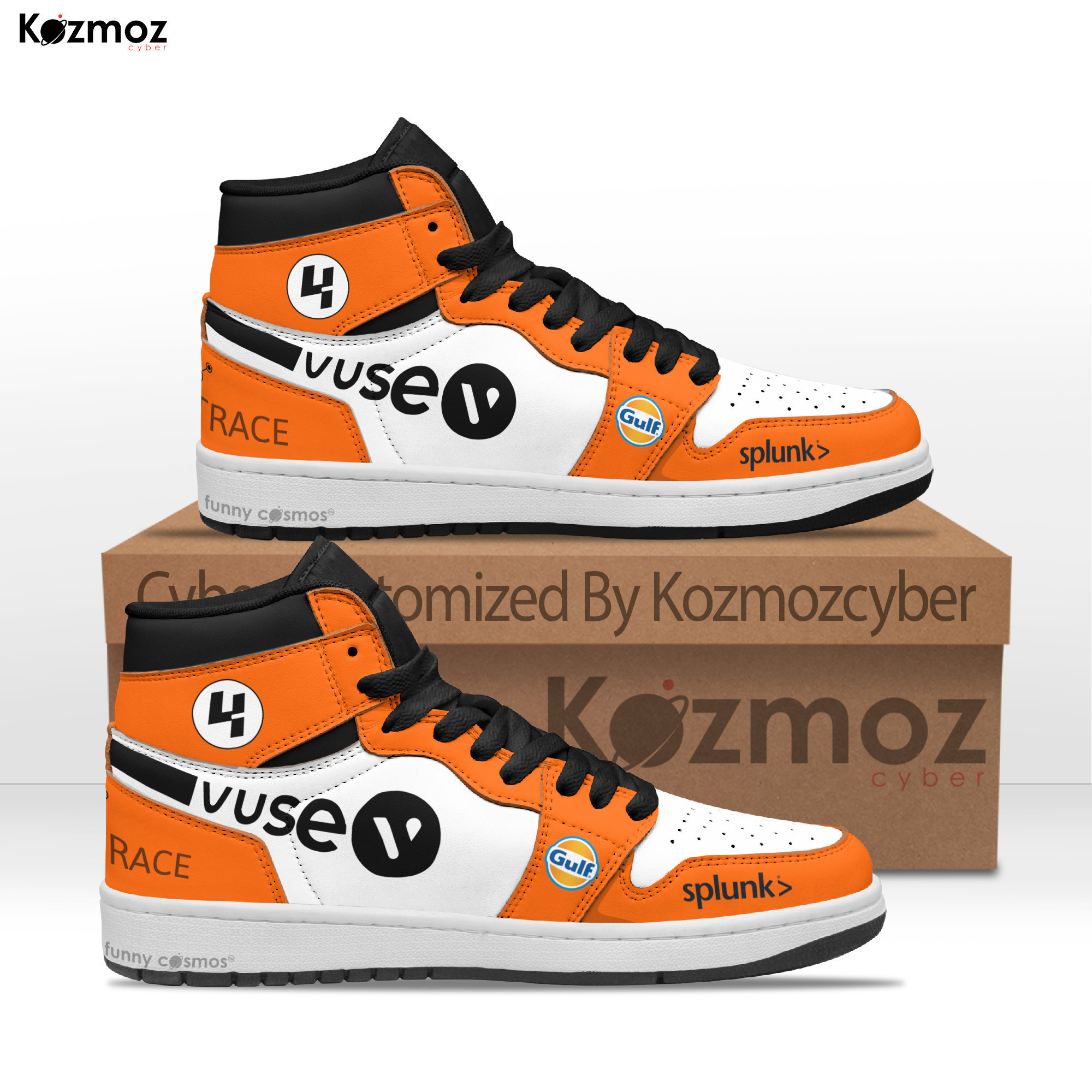
Gulf Racing Retro Quarter-Zip Sherpa Pullover
Smooth printed exterior with a plush white sherpa-lined stand-up collar.
View Sherpa Pullover
Gulf #20 1970 Livery Custom Motorsport Sneakers
Powder-blue and marigold colorway matched to the #20 Gulf polos.
View Custom SneakersFrequently Asked Questions: Steve McQueen & the Porsche 917 #20
Did Steve McQueen actually drive the Porsche 917 #20 in the 1970 24 Hours of Le Mans?
Steve McQueen wanted to co-drive a Porsche 917 with Formula 1 champion Jackie Stewart in the official June 1970 race, but Cinema Center Films' insurance underwriters refused to cover him during the live 24-hour race. Instead, Jo Siffert and Brian Redman raced the #20 in the official event, while McQueen drove the #20 917K extensively in high-speed filming sessions at La Sarthe immediately after the race.
Which Porsche 917 chassis was used as the #20 hero car in the movie Le Mans?
Three different 917 chassis wore the #20 roundel for the film: chassis 917-004 (raced by Siffert and Redman in the actual 1970 Le Mans race), chassis 917-022 (owned by Solar Productions as the primary movie camera car), and chassis 917-013 (rebuilt after David Piper's filming crash to stage the movie's #20 crash scene by remote control).
Can I add my own name and racing number to the #20 Gulf Le Mans polo shirt?
Yes. You can keep the classic #20 roundel or enter your own custom name, initials, or driver number on the product page before adding the Steve McQueen #20 917 Gulf Le Mans Custom Polo Shirt to your cart. Ordering 2 or more shirts for a karting or track-day group unlocks multi-buy savings up to 20% off.
How long does production and shipping take for custom #20 Gulf apparel?
Every garment is printed, cut, and sewn to order in 6 to 8 business days for apparel (10 to 12 business days for custom footwear), followed by tracked international delivery taking 7 to 12 business days to the United States, United Kingdom, Europe, Canada, and Australia. For Christmas delivery, place personalised orders by November 20 (Standard Shipping) or December 4 (Express Shipping).
Are Kozmozcyber Gulf Le Mans shirts official team merchandise?
No. All apparel on Kozmozcyber features independent fan-inspired tribute artwork celebrating historic motorsport eras and is not affiliated with or endorsed by Porsche AG, Gulf Oil International, Solar Productions, or the Automobile Club de l'Ouest.
Editorial & Design Disclaimer: This article is an independent historical motorsport feature. All apparel offered by Kozmozcyber consists of independent fan-inspired tribute designs and is not official or licensed merchandise of any automaker, racing team, sponsor, film studio, or championship.
Circuit de la Sarthe Engineering: How Aerodynamics, Night Stints, and Mechanical Stamina Define Endurance Liveries
Unlike ninety-minute Grand Prix sprints run on billiard-smooth permanent autodrome asphalt, the 13.626-kilometer Circuit de la Sarthe mixes permanent track sectors with crowned public highway lanes from Mulsanne to Arnage. Cars spend over seventy percent of every lap at full throttle, reaching top speeds above 330 to 345 km/h before braking hard into the Daytona and Michelin chicanes or threading through the high-speed Porsche Curves. That punishing duty cycle shapes every curve of the bodywork and every paint scheme featured in Steve McQueen & Porsche 917 #20: Iconic Gulf Le Mans Racing Legacy.
In endurance prototype and GT racing, a livery is far more than a sponsor billboard. Spotters perched on the pit wall at 3:00 AM, marshals stationed at Indianapolis, and mechanics preparing tires in the garage rely on high-contrast nose stripes, fin numbers, and roof-mounted leader lights to identify sister entries through rain spray and headlight glare. Whether a team runs classic powder blue and marigold orange, royal purple and white, or Rosso Le Mans scarlet paired with Giallo Modena yellow, high-visibility color blocking separates factory cars from customer entries at a single glance.
Night stints also expose every weakness in chassis balance and driver ergonomics. As track temperatures drop by fifteen degrees Celsius between sunset and dawn, aerodynamic downforce efficiency shifts, brake duct blanking must be adjusted during fuel stops, and triple-stinting medium-compound Michelin tires becomes the decisive strategic weapon. Understanding these mechanical details explains why endurance fans form such deep emotional bonds with specific chassis numbers and race-winning colorways.
Collector & Enthusiast Reference Matrix: Era Specifications vs. Tribute Apparel Design
To help enthusiasts connect the historical details of Steve McQueen & Porsche 917 #20: Iconic Gulf Le Mans Racing Legacy with authentic trackside wardrobe choices, our comparison table outlines the defining technical characteristics of classic motorsport eras alongside the construction standards used in our custom fan-inspired tribute garments:
| Dimension | Historic Track & Livery Benchmark | Modern Broadcast & Paddock Standard | Kozmozcyber Custom Tribute Execution |
|---|---|---|---|
| Colorway & Contrast | High-contrast analog paint schemes engineered for naked-eye pit wall visibility | Matte carbon-weight-saving finishes with neon LED number panels | 200°C HD dye-sublimation locking deep, fade-proof pigments into the yarn |
| Material & Breathability | Heavy quilted cotton and early multi-layer flame-retardant race overalls | Lightweight moisture-wicking paddock team polos and softshell outer layers | 230 GSM 95% poly / 5% spandex micro-pique polos & 250 GSM brushed fleece hoodies |
| Graphic Durability | Embroidered cloth patches and hand-painted chassis roundels | Heat-transfer vinyl logos that often crack after repeated machine washing | Panel-by-panel cut-and-sew printing with zero surface film, cracking, or peeling |
| Personalisation | Driver surname and blood-group stitching on the belt or upper chest | Fixed driver numbers #1 to #99 assigned by championship regulations | Custom name, car number, or sim-racing team title dyed directly into chest and back |
How to Build a Trackside & Watch-Party Wardrobe Inspired by Motorsport History
Whether you are walking the support-race paddock at Silverstone, camping near Arnage during the 24 Hours of Le Mans, or hosting a Sunday morning Grand Prix watch party, dressing for a race weekend requires balancing visual heritage with all-day climate comfort. Trackside temperatures can swing from 32°C asphalt glare during afternoon qualifying to chilly 10°C gusts once the sun drops behind the grandstands.
Start with a breathable 230 GSM all-over print racing polo shirt from our Grand Prix Era collection or 24 Hours of Le Mans collection as your base layer. Unlike stiff plastisol screen prints that trap sweat against your chest, dye-sublimated micro-pique allows full airflow right through the deepest black, scarlet, or royal purple panels. For cooler evening sessions or autumn rounds at Spa-Francorchamps and Suzuka, layer a sherpa-lined quarter-zip pullover or a wind-resistant motorsport bomber jacket over your polo.
If you are ordering gear for a karting club, sim-racing league, or family race trip, remember that combining 2, 3, 4, or 4+ garments in a single cart automatically unlocks 5% to 20% multi-buy bundle savings, and orders over $100 qualify for free tracked standard shipping worldwide.
Frequently Asked Questions About Motorsport Heritage & Custom Tribute Gear
Why do historic motorsport liveries remain so popular in modern streetwear?
Classic liveries from the 1960s through the 1990s were designed for instant visual recognition without digital graphics, using bold color theory, clean racing stripes, and iconic number roundels that translate naturally into timeless polos, jackets, and quarter-zip pullovers.
How does dye-sublimation keep vintage racing colors from fading in the wash?
During cut-and-sew production, solid ink is heat-pressed at 200°C (392°F) so it turns into gas and bonds permanently inside the polyester fibers. Because the color is inside the yarn rather than sitting on top as a rubberized layer, it never cracks, peels, or washes out.
Can I add my own driver name and race number to a heritage tribute shirt?
Yes. Most shirts, hoodies, and jackets on Kozmozcyber.store include optional personalisation fields ($1.45 to $2.50) so you can print your own name, lucky race number, or karting team name directly into the garment panels before sewing.
What sizes are available for custom motorsport tribute apparel?
Our cut-and-sew polos, quarter-zip jerseys, hoodies, and bomber jackets are available in Kids, Youth, and Adult sizes from S up to 5XL with a relaxed athletic fit. Check our size measurement guide before ordering.
Are the garments featured with this article official team or championship merchandise?
No. All team, driver, car, and circuit names in our editorial articles are used strictly for historical and journalistic commentary. Apparel sold on Kozmozcyber.store consists of independent, fan-inspired tribute artwork and is not affiliated with or endorsed by any racing team, driver, or championship.
SHARE


0 comment
Be the first to comment