

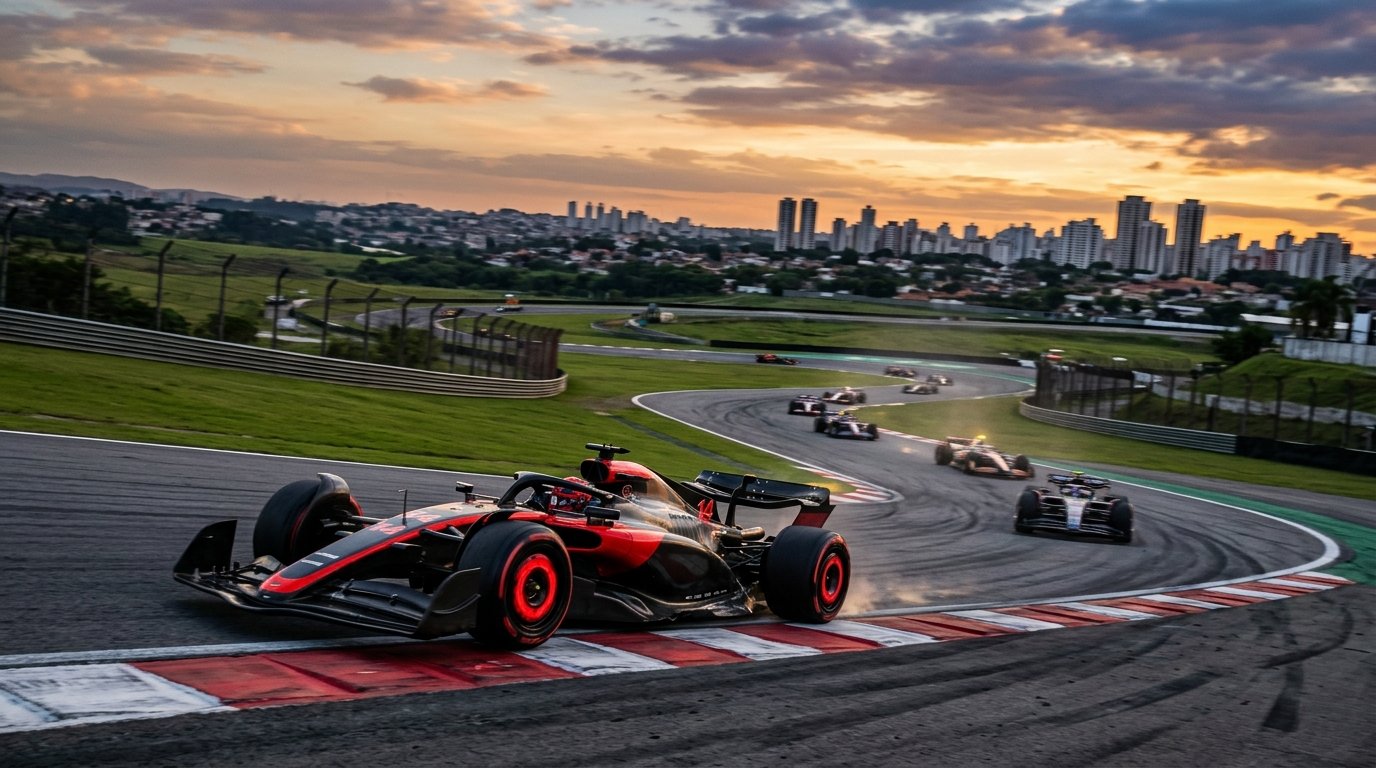
Quick answer: The 2026 São Paulo Grand Prix runs November 6 to November 8 at the 4.309-kilometer Autódromo José Carlos Pace. As the penultimate Sprint weekend of 2026, Interlagos awards 8 extra championship points on Saturday before Sunday's 71-lap main race. Drivers face a steep 43-meter elevation drop, heavy counter-clockwise G-forces, and notorious tropical cloudbursts that frequently scramble tire strategies.
Key Takeaways: High Stakes in São Paulo
- Interlagos hosts Round 20 of the 2026 Formula 1 championship with 34 total points available across the Sprint and Grand Prix.
- A sliding points scale from 8 points down to 1 point in Saturday's 100-kilometer sprint offers contenders an immediate match point before Sunday.
- The anti-clockwise circuit puts extreme physical loads on drivers' left neck muscles across 15 technical corners.
- The steep uphill drag from Junção through the pit straight rewards battery hybrid deployment and slipstreaming into the downhill Senna S.
- Sudden tropical convective rainfall frequently sweeps over the track within minutes, creating dramatic split-second pit stop decisions.
1. Sprint Shootout Points and Championship Math
The Formula 1 paddock travels south to Brazil for one of the most intense race meetings on the international calendar. With only four rounds remaining in the 2026 season, the Autódromo José Carlos Pace hosts the penultimate Sprint format of the year. That means standard Grand Prix preparation goes straight out the window. Teams get a single sixty-minute free practice session on Friday morning before parc fermé regulations lock down car setups for the entire weekend.
Sprint weekends award points to the top eight finishers on Saturday afternoon. The winner takes 8 points, second place earns 7, and the scale descends down to a single point for eighth position. While 8 points might look modest compared to the 25 points awarded for a Grand Prix victory, the cumulative 34-point ceiling for a perfect weekend can flip a world championship fight upside down.
Consider the points distribution across the field. If a championship leader sweeps the Sprint race and sets the fastest lap during Sunday's Grand Prix victory, they outscore a rival finishing third across both events by fifteen points in forty-eight hours. With Mercedes prodigy Andrea Kimi Antonelli battling McLaren and Ferrari front-runners for drivers' honors, every centimeter of track position matters. Official race regulatory updates are available through the governing body Source.
2. Full Weekend Schedule: US Central Time and Local Times
Because São Paulo operates in the Brasília Time zone (UTC-3), North American motorsport fans enjoy ideal viewing windows. Unlike Asian or European rounds that demand pre-dawn alarms, the Brazilian Grand Prix aligns smoothly with morning coffee and lunchtime schedules across the Americas.
Notice how Friday afternoon sets the stage. Sprint Qualifying features shorter knockout segments: twelve minutes in SQ1, ten minutes in SQ2, and only eight minutes in SQ3. Teams are mandated to run medium-compound tires in SQ1 and SQ2 before bolting on brand new soft slicks for the final pole shootout. One minor lockup into Turn 1 destroys the lap and buries a driver in the midfield.
3. Circuit Physics: 43-Meter Elevation and Counter-Clockwise Neck Strain
Built in an undulating natural bowl between two subterranean reservoirs, Interlagos is an old-school masterpiece. Modern street tracks feel sterile compared to the dramatic topography of Autódromo José Carlos Pace. The circuit plunges 43 meters from the crest of the pit straight down to the infield lake before climbing relentlessly back toward the start-finish line.
Running anti-clockwise places unusual punishment on drivers. Because the vast majority of international circuits run clockwise, drivers develop thicker neck musculature on their right side. At Interlagos, sustained left-hand loading through Curva do Sol and the fast sweeps of Arquibancadas strains unaccustomed muscle groups. Drivers experience over 4G of lateral loading while their heads are pulled violently to the right.
Autódromo José Carlos Pace: Elevation and G-Force Zones
Look closely at the corner sequence between Turn 1 and Turn 3. Coming off the main straight, cars reach speeds in excess of 330 kilometers per hour. Drivers hit the brakes precisely seventy meters before the apex, scrubbing over 200 kilometers per hour in under two seconds. The initial deceleration registers negative 4.8G, which causes blood to rush forward in the driver's eyes. As the car drops downhill into the right-handed transition of the Senna S, the front-left suspension unloads, making front tire lockups incredibly easy.
The opposite challenge awaits at the end of the lap. Exiting Turn 12 at Junção, drivers must plant the throttle while the rear tires fight for grip on uphill cambers. Any wheelspin overheats the rubber and ruins the drive up the hill. The climb past Subida dos Boxes and through Arquibancadas spans 1.2 kilometers of unbroken acceleration. Cars deploy battery energy here to protect against DRS overtakes into Turn 1.
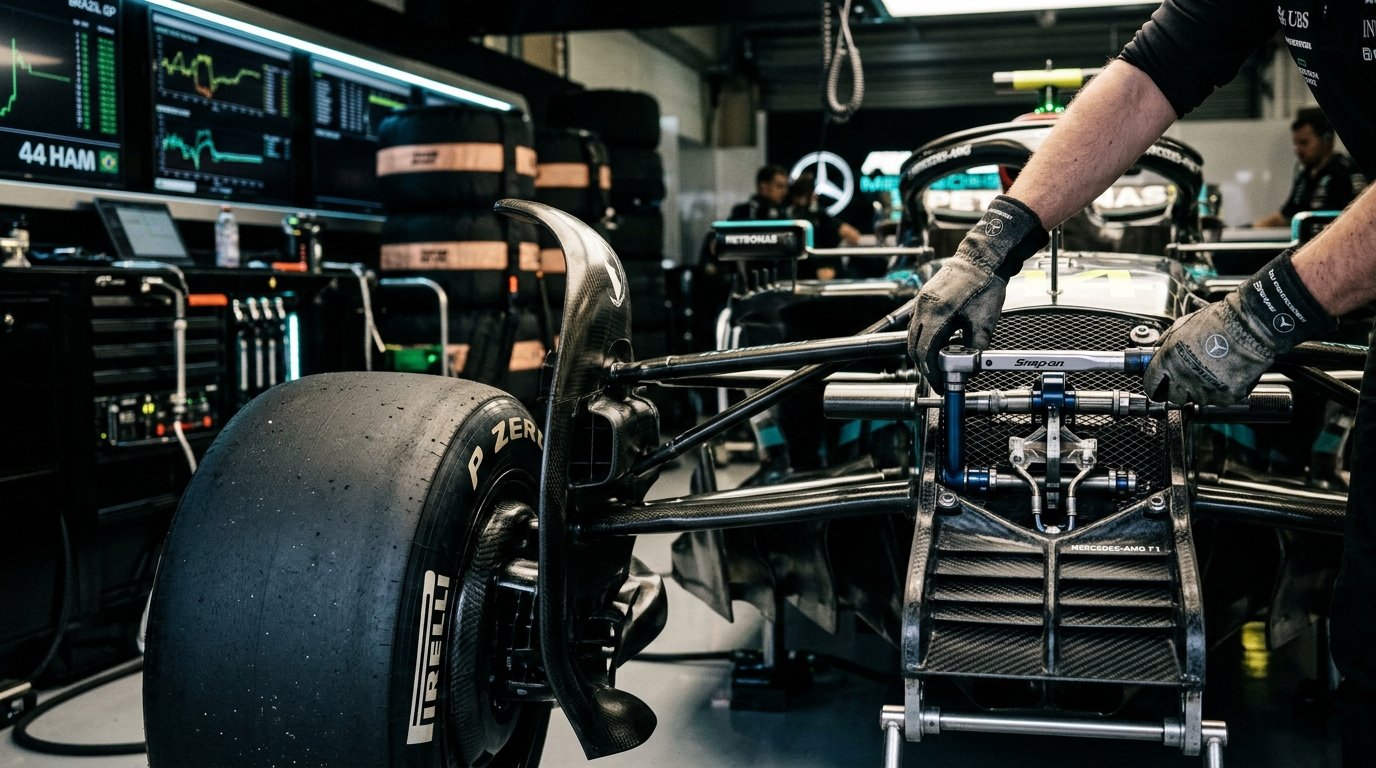
4. Tropical Microclimate and Weather Roulette
No conversation about Interlagos is complete without addressing the climate. Situated near the Atlantic coastal range of Serra do Mar, the circuit creates its own weather system. Morning sunshine can bake the asphalt to over 45 degrees Celsius, degrading soft tires within eight laps. Then, without warning, dark humid clouds roll in from the south, dumping torrential rain across half the track while the opposite side stays bone dry.
These microclimate shifts produce legendary racing moments. Fans remember Giancarlo Fisichella winning in the wet in 2003, Lewis Hamilton claiming his maiden title in the final corner of a 2008 downpour, and Max Verstappen passing half the grid in torrential conditions in 2016. When rain falls at Interlagos, the circuit drains poorly in the infield, leading to rivers of standing water across the apex of Curva do Sol.
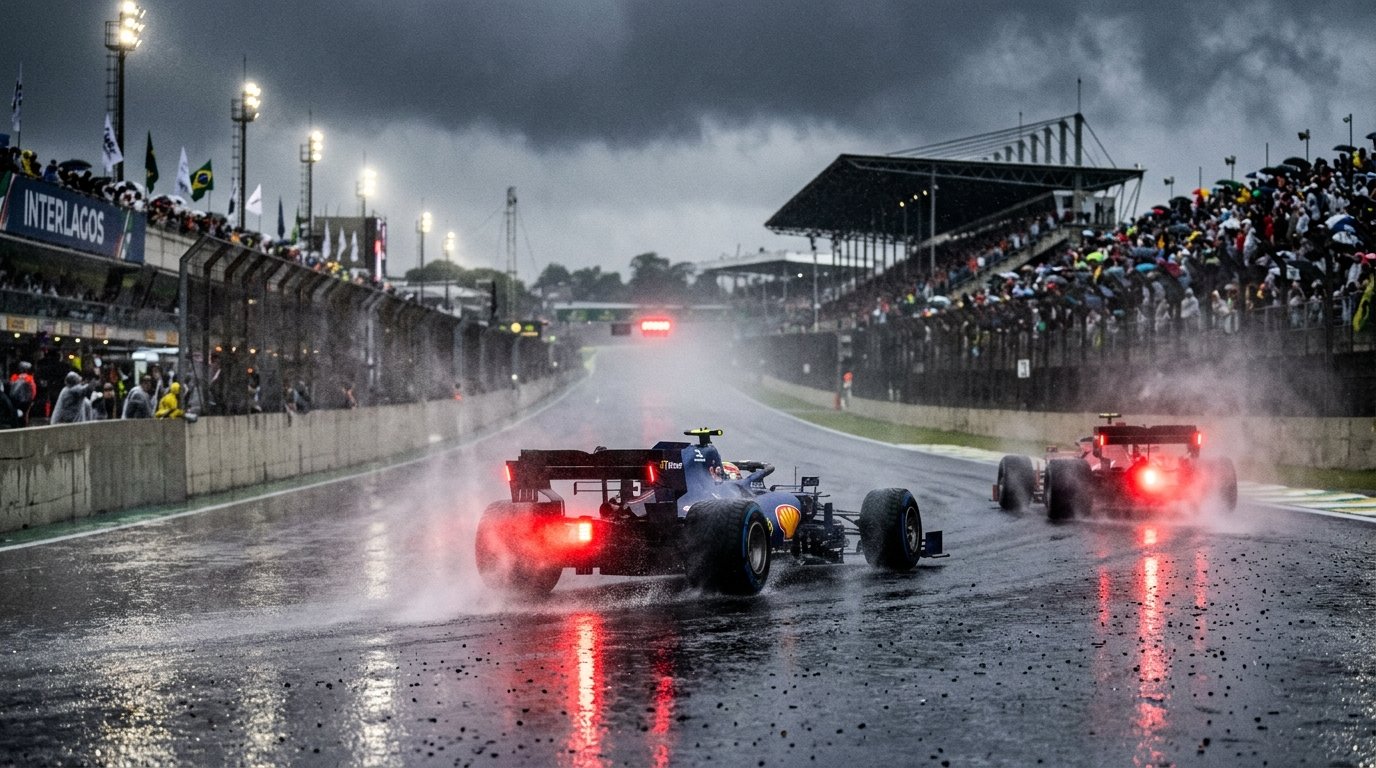
Strategy pit walls monitor live radar loops every thirty seconds. The crossover point from dry slick tires to intermediate wet compounds happens when lap times drop by seven seconds. Pit a lap too early on dry tires, and you destroy the grooved tread within two miles. Pit a lap too late, and your driver spins into the barriers on aquaplaning slicks. Teams that react fastest to São Paulo rain clouds regularly capture shock podium results.
Personalize Your Racing Gear for the 2026 Season Finale
Rep your favorite racing livery with custom name, driver number, and national flag prints. Kozmozcyber prints each garment individually on heavyweight breathable fabrics. Take advantage of our multi-buy savings: 10% off two items, 15% off three, and 20% off four or more. Use code WELCOME10 at checkout for an extra 10% off your first order.
5. The Spirit of Ayrton Senna on Sacred Brazilian Asphalt
Beyond technical telemetry and weather radar, Interlagos carries emotional weight that few sports venues can match. This is the spiritual home of Ayrton Senna da Silva. Every lap around the circuit retraces the footsteps of Brazil's national hero, who carried the hopes of a nation on his shoulders through the golden era of turbo and V10 racing.
Senna's victory at the 1991 Brazilian Grand Prix remains one of the most heroic chapters in world athletics. Leading comfortably in his McLaren MP4/6, his gearbox began failing with twenty laps remaining. First, fourth gear vanished, followed by third and fifth. With heavy rain drenching the track in the closing stages, Senna drove the final laps trapped entirely in sixth gear, revving the engine out of hairpins and muscling the car around low-speed corners.
When he took the checkered flag, physical exhaustion and violent muscle spasms left him screaming in agony over team radio. He had to be lifted from the cockpit by medical staff. On the podium, he summoned his remaining strength to lift the Brazilian trophy above his head, sending over one hundred thousand fans into ecstatic tears. That spirit lives on in the roar of the grandstands today.
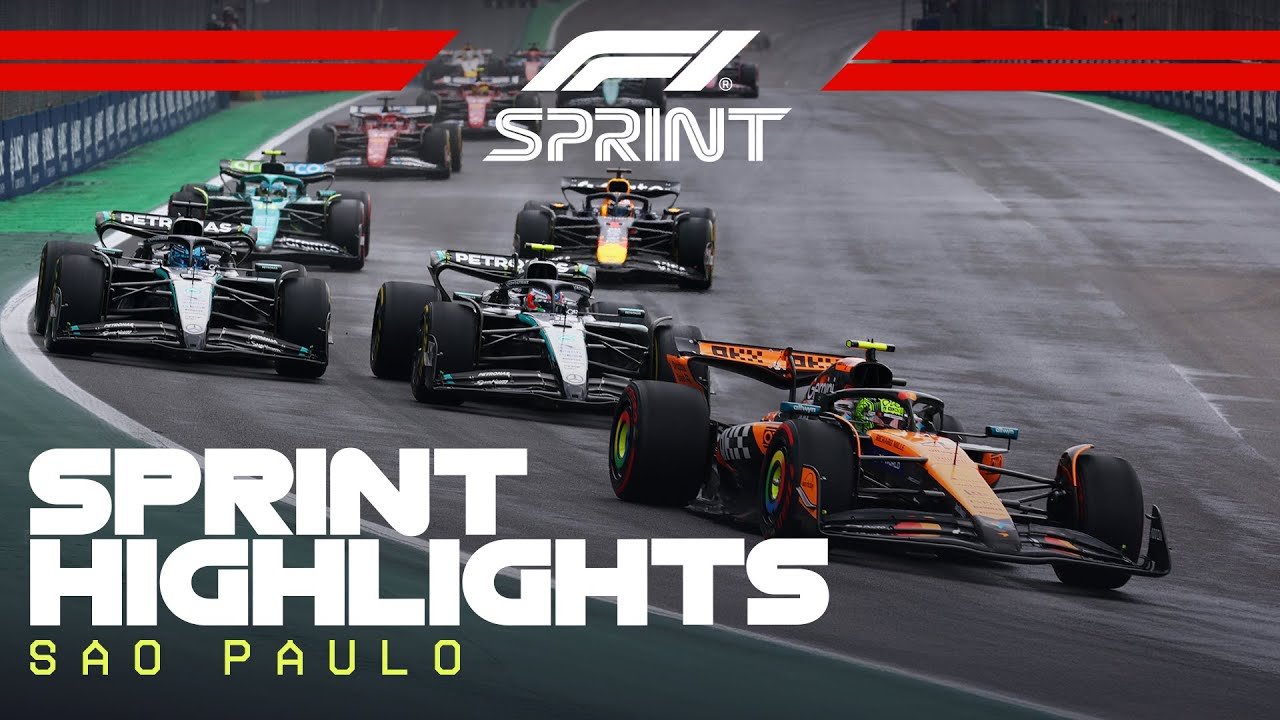
Sprint Highlights | São Paulo Grand Prix: Watch wheel-to-wheel battles and overtakes down into the Senna S from previous Interlagos sprint races on the official Formula 1 channel.
6. Fan Gear Picks: Senna, McLaren and Grand Prix Tribute Apparel
Whether you are watching the Sprint race trackside in São Paulo or tuning in from home, celebrate Brazilian motorsport heritage with our custom-crafted tribute apparel. Every piece is cut and sewn to order from high-performance breathable fabrics designed for lasting comfort.


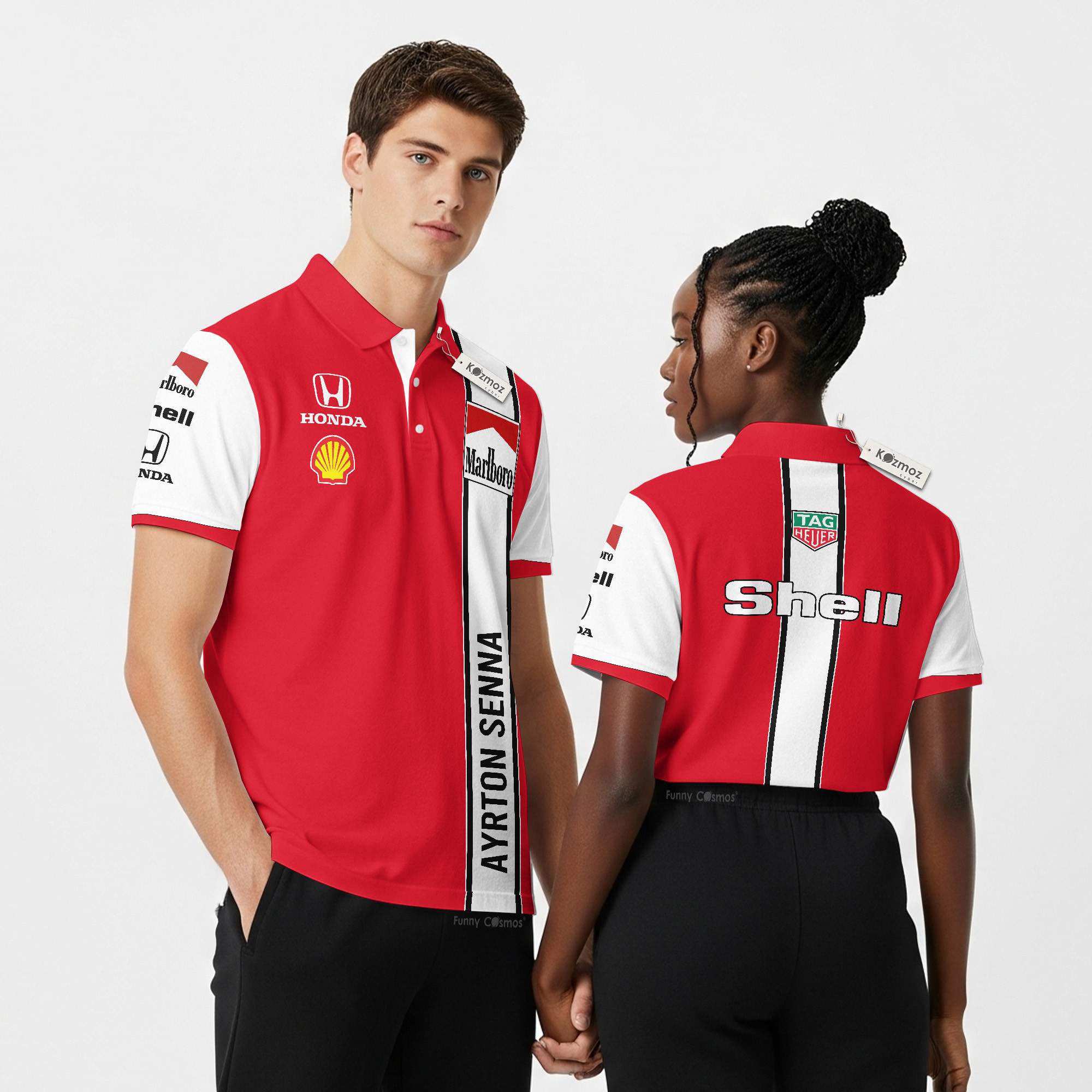

Looking for more motorsport categories? Explore our full range of Racing Caps, check our weather-ready Racing Bomber Jackets, or browse lightweight track wear in our Polo Shirt Collection and Quarter-Zip Jerseys. Check our official Size Guide to ensure an exact fit before ordering. To learn more about personalization steps and fees, read our practical guide on how to personalize a racing shirt or discover gift ideas in our 2026 Racing Gift Guide.
7. Frequently Asked Questions: São Paulo Grand Prix 2026
How many championship points are awarded during the 2026 São Paulo Grand Prix weekend?
A maximum of 34 points is available across the weekend. The Saturday Sprint race awards 8 points to the winner, 7 to second, 6 to third, descending down to 1 point for eighth place. The Sunday Grand Prix awards 25 points for first place down to 1 point for tenth, plus 1 bonus point for setting the fastest lap inside the top ten.
What time does the 2026 São Paulo Grand Prix start in US Central Time?
The 2026 São Paulo Grand Prix starts at 11:00 AM US Central Time (12:00 PM Eastern Time / 9:00 AM Pacific Time) on Sunday, November 8, 2026. Saturday's Sprint race starts at 9:00 AM US Central Time. Live television coverage in the United States airs across ESPN and ABC, with commercial-free streaming on F1 TV Pro.
Why is the Autódromo José Carlos Pace at Interlagos so physically demanding on drivers?
Interlagos runs in an anti-clockwise direction, subjecting drivers to extreme lateral G-forces that pull their helmets violently to the right. Because most world tracks run clockwise, drivers' neck muscles experience unusual fatigue. The circuit also features a dramatic 43-meter elevation change, heavy downhill braking into Turn 1, and bumpy high-speed sections through Arquibancadas.
What are the production and holiday shipping cutoffs for Kozmozcyber racing apparel?
Every Kozmozcyber apparel item is custom-crafted to order within 6 to 8 business days before tracked shipping. Customers enjoy a 4-hour free modification window after ordering. Orders of $100 or more automatically receive Free Worldwide Shipping. For guaranteed holiday arrival before Christmas, place orders by November 20 for Standard Shipping or December 4 for Express US Shipping. Review all store policies on our Kozmozcyber Facts Page.
Conclusion: Championship Pressure at Interlagos
Few venues on earth can match the sensory explosion of the São Paulo Grand Prix. From the deafening samba drums in the grandstands to the screech of carbon brake pads diving into the Senna S, Interlagos strips away technical excuses and puts raw racing instinct on full display. With 34 points on the table across forty-eight hours, the 2026 championship fight will find its defining turning point in the hills of Brazil. Prepare your gear, study the radar maps, and get ready for a sensational weekend of motorsport drama.
Editorial & Merchandise Disclaimer: Kozmozcyber apparel designs are independent fan artwork celebrating motorsport culture and racing heritage. Driver names, team names, circuits, and championship titles are mentioned solely in a journalistic, historical, and commentary capacity. Kozmozcyber is not affiliated with, sponsored by, or endorsed by Formula 1, the FIA, McLaren Racing, Mercedes-AMG Petronas, Scuderia Ferrari, Red Bull Racing, or the Ayrton Senna Institute.
0 comment
Be the first to comment