

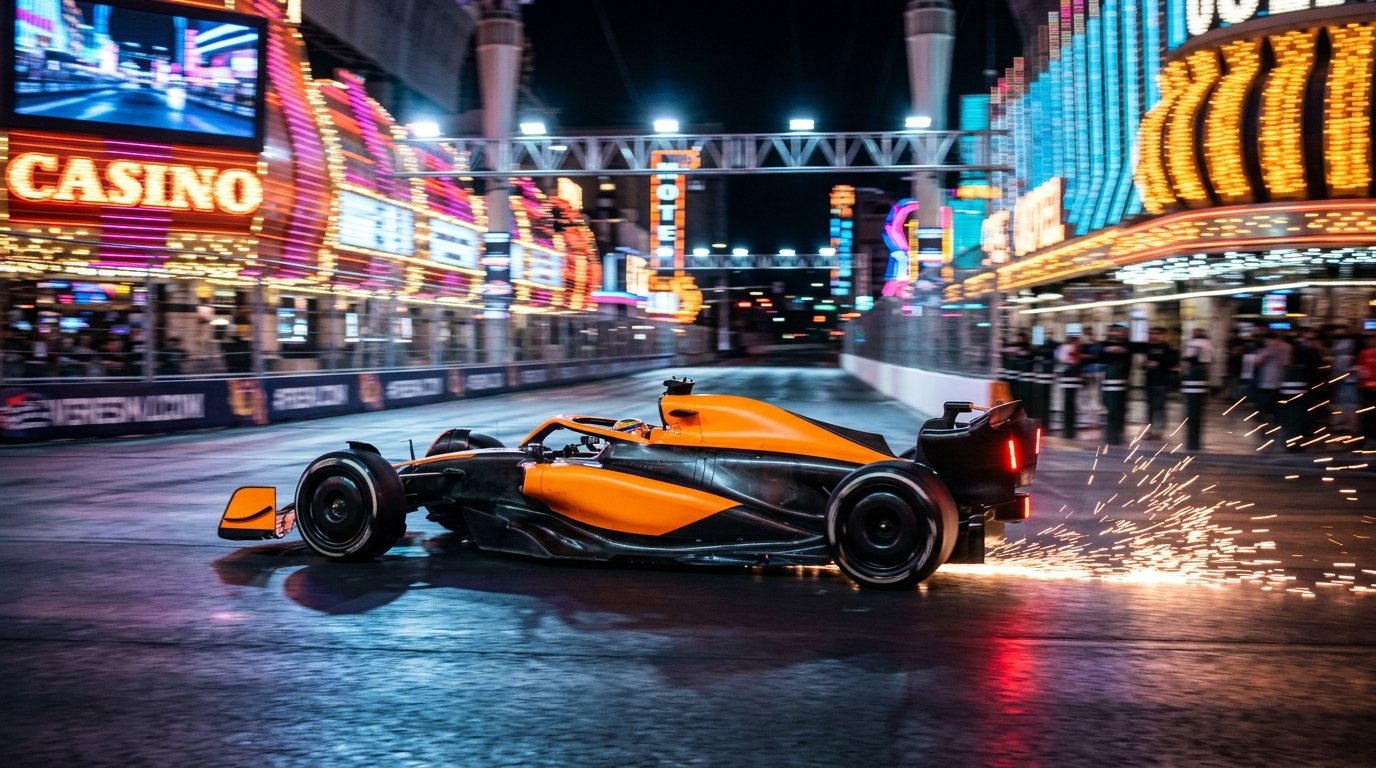
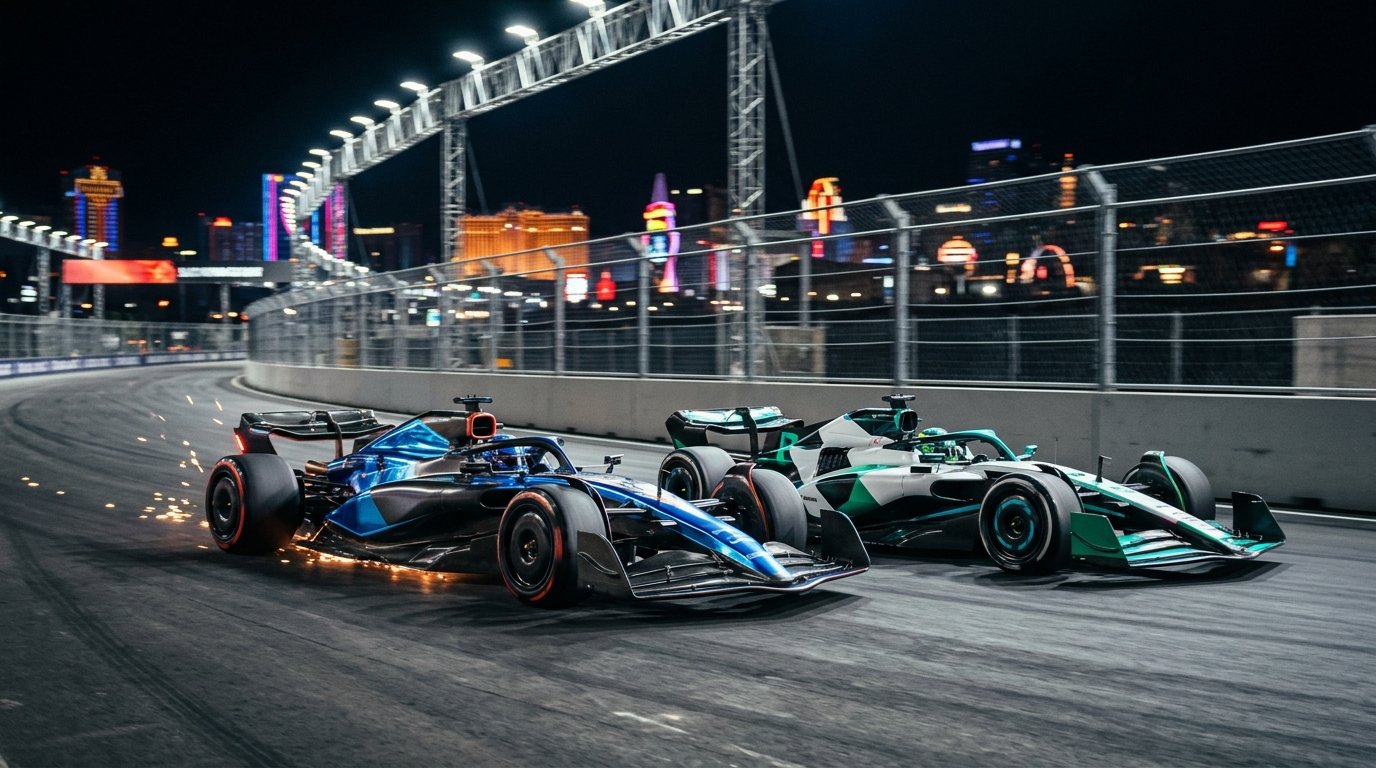
McLaren F1 upgrades arrive in Nevada as the Formula 1 grid sets up along the Las Vegas Strip Circuit for round 21 of the 2026 World Championship. Official team briefings Source confirm Andrea Stella and the Woking technical department brought new aerodynamic parts to the track, following up on their São Paulo victory. With Mercedes and Kimi Antonelli already clinching the 2026 titles, McLaren trails Red Bull Racing by seventeen points in the fight for third in the Constructors championship. The 1.9 kilometer flat-out blast down Las Vegas Boulevard creates an intense top speed test, pushing the papaya squad to field a low-drag rear wing package that balances straight-line velocity against corner stability in the chilly desert night.
Quick answer: McLaren introduced updated front wing cascades, revised floor edge geometry, and a low-drag rear wing for the 2026 Las Vegas Grand Prix. Andrea Stella confirmed these late-season developments serve a dual purpose. They help McLaren challenge Red Bull Racing for third in the Constructors championship while establishing the baseline aerodynamic trajectory for their 2027 challenger.
Key Takeaways
- Late Season Upgrades: McLaren brought new front wing cascades, reshaped floor fences, and a track-specific low-drag beam wing to Las Vegas.
- Championship Math: McLaren sits seventeen points behind Red Bull Racing in the contest for third place in the 2026 Constructors championship.
- Straight-Line Physics: The 1.9 kilometer Las Vegas Strip straight demands top speeds above 340 km/h, requiring lower rear wing downforce angles.
- 2027 Correlation: Team Principal Andrea Stella confirmed track data from these new surfaces directly verifies wind tunnel models for the 2027 design.
- Tribute Apparel: Fans can review matching driver gear in the Polo Shirt Collection and Race Suit Style Apparel catalog.
1. Why McLaren Continues Upgrades in Late Season
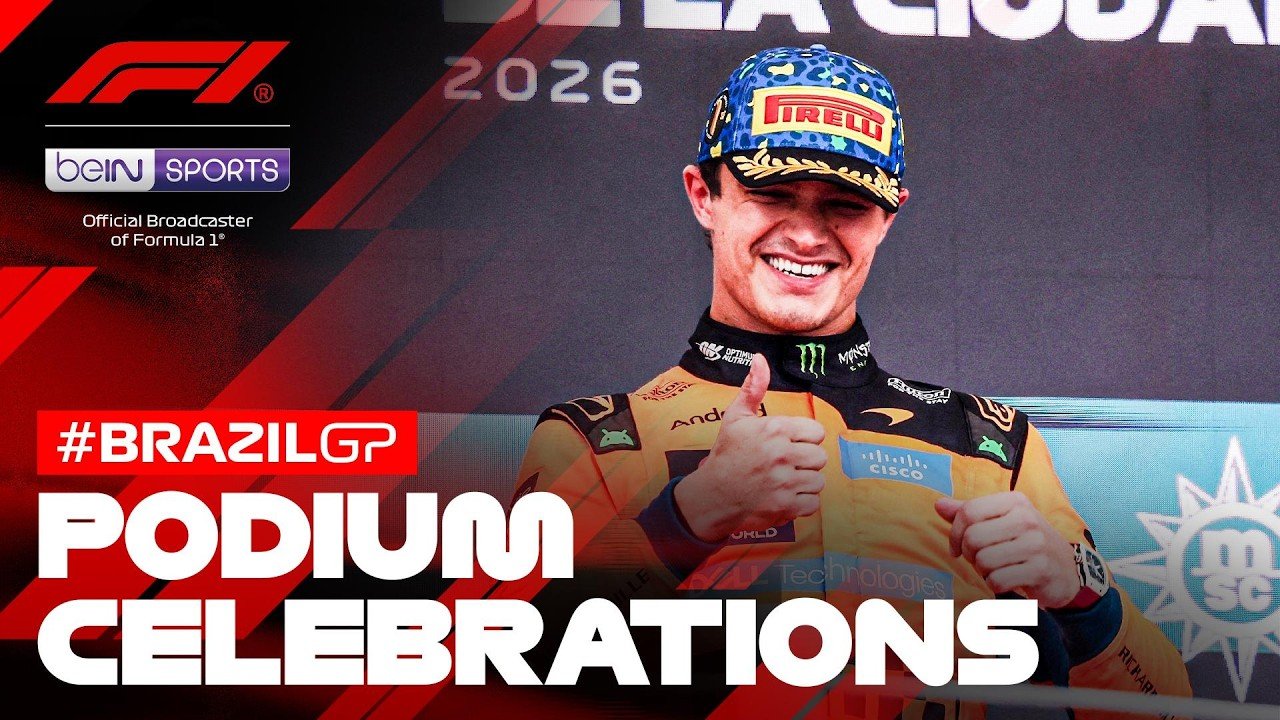
Most engineering departments halt wind tunnel testing by October. Factory teams usually freeze floor development to allocate budget cap resources toward the following season. McLaren chose an alternative path. The technical team in Woking delivered a refreshed aerodynamic package for the Brazilian round at Interlagos, which helped Lando Norris secure victory in changing weather. Now in Nevada, McLaren is running an updated iteration focused on straight-line speed.
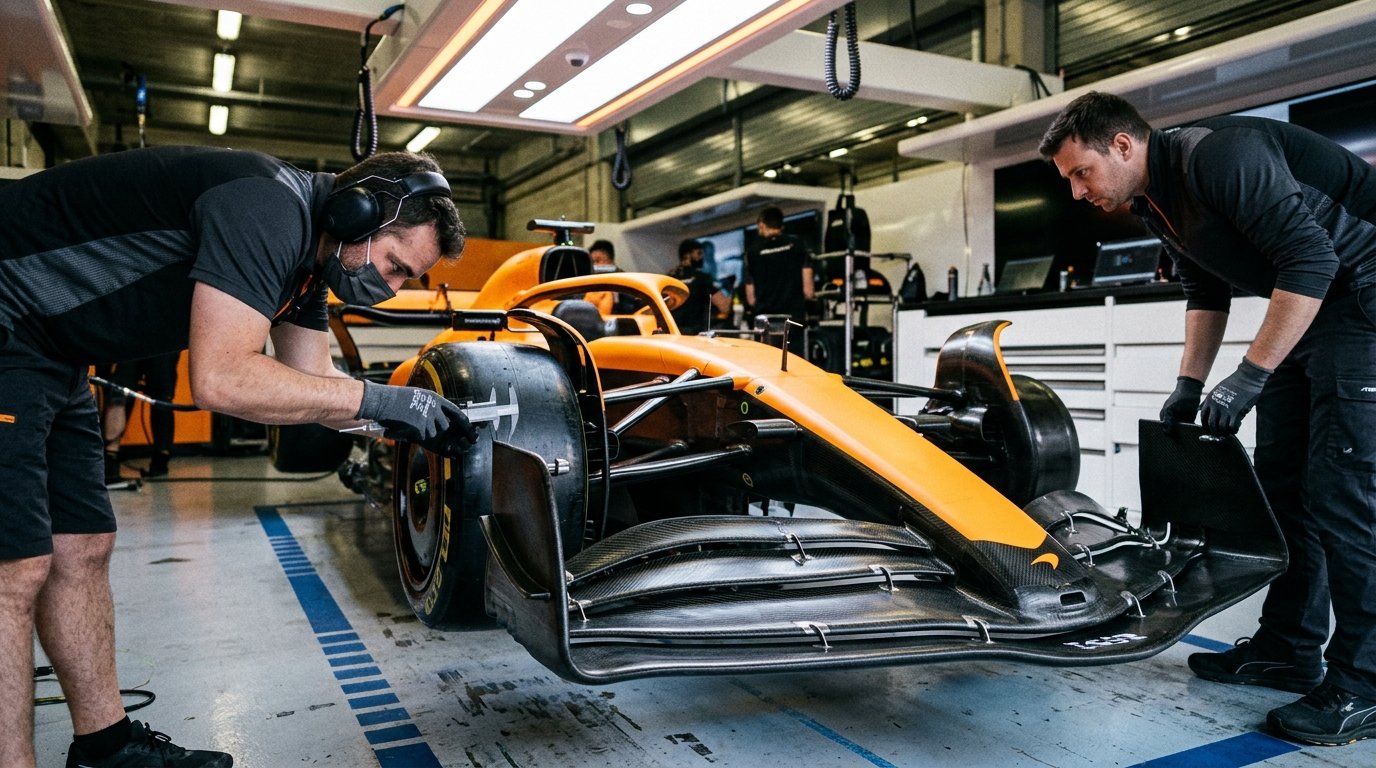
Trackside data confirms the updates center on airflow redirection around the front wheels. Modified endplate diveplanes work alongside revised vortex generators along the floor edges. These changes stabilize the underfloor pressure gradient during rapid transitions. By keeping the car settled over pavement bumps on the Strip, drivers gain confidence under heavy braking.
2. Las Vegas Strip Aerodynamic Challenge
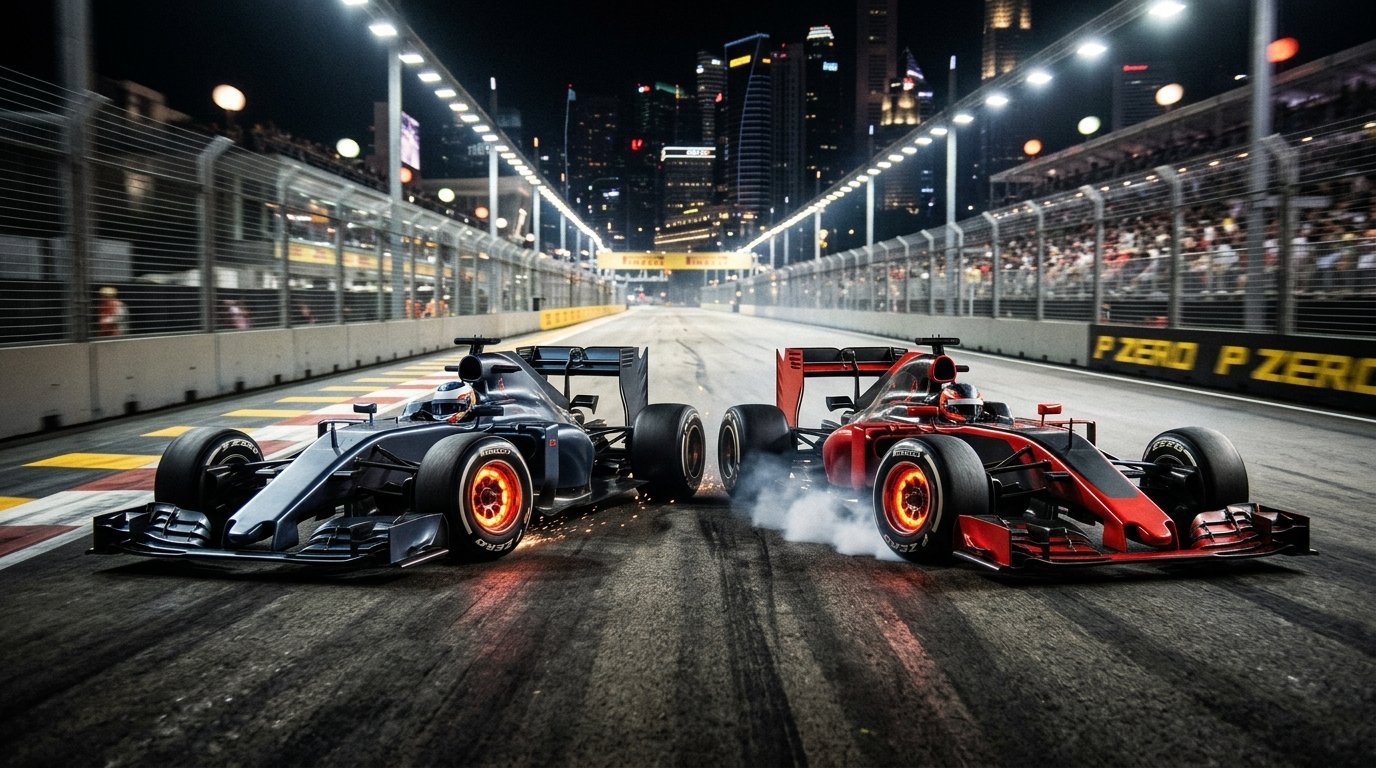
The Las Vegas Strip Circuit measures 6.201 kilometers with seventeen turns. Drivers remain on full throttle for nearly two kilometers along Las Vegas Boulevard. That long straight punishes excessive aerodynamic drag. In earlier races at Monza and Baku, straight-line deficits cost McLaren lap time against Red Bull and Ferrari. Red Bull consistently logged higher trap speeds when DRS opened.
Cold desert temperatures introduce another variable. Ambient night temperatures in Nevada frequently dip toward twelve degrees Celsius. Cold asphalt makes front tire warm-up difficult. If an engineer cuts too much wing angle to gain top speed, the car slides in the slow chicanes, which destroys tire temperatures. Andrea Stella noted that balance requires precise rear flap trimming rather than stripping away downforce entirely.
Telemetry estimate shows how McLaren low-drag rear wing trims cut the straight-line speed deficit from 10.9 km/h down to 2.3 km/h along the 1.9 km Las Vegas Strip straight.
3. Technical Breakdown: Low Drag vs Standard Package
Aerodynamic setup choices determine whether a car can defend down the Strip or get overtaken before Turn 14. The specifications below contrast the low-drag configuration prepared for Nevada with the standard medium downforce package used during autumn European races.
| Aero Component | Standard Downforce Trim | Las Vegas Low Drag Spec | Trackside Impact |
|---|---|---|---|
| Rear Wing Mainplane | Deep spoon profile with steep angle | Flattened camber with trimmed trailing edge | Cuts wake pressure and lifts top speed by 8.6 km/h |
| Beam Wing Assembly | Stacked dual-element carbon cascade | Single low-chord carbon profile | Reduces diffuser interaction drag on straights |
| Front Wing Flap Geometry | High-angle upper flaps for turn-in grip | Trimmed chord with reshaped outboard tips | Keeps aero balance centered without locking front brakes |
| Floor Edge Fences | Multi-slit floor seal for high downforce | Rigid edge scrolls adapted for bumpy asphalt | Prevents porpoising stall over manhole covers |
Support Papaya Racing: Custom Fan Tribute Apparel
Celebrate Grand Prix racing with custom fan-inspired tribute pieces. Personalise your racing shirt with your name and racing number for a flat 2.50 dollar fee, or submit custom design ideas. Order two items to save 10 percent, three items to save 15 percent, or four or more items for 20 percent off automatically at checkout. Orders over 100 dollars receive free standard shipping worldwide.
Explore Racing Polo Shirts →4. Andrea Stella on 2027 Trajectory and Track Correlation
Beyond immediate points, track correlation drives this development push. Wind tunnels operate under strict velocity and scale caps governed by the FIA sporting code. Modern CFD simulations approximate turbulent air, yet bumpy street circuits often reveal airflow separation that software fails to predict. By deploying real carbon components in competitive race stints, McLaren collects unfiltered sensor telemetry.
Andrea Stella highlighted this learning feedback loop. The floor edge vortex paths introduced in recent weeks establish the foundational baseline for the 2027 car architecture. If data gathered down the Strip aligns with wind tunnel models, engineers can finalize initial carbon tooling in Britain with greater confidence.
5. Contextual Gear Picks: Tribute Apparel for Race Weekends
Trackside spectators and sim racers can explore these entity-matched fan tribute items from our store catalog. Every garment is made to order with durable stitching and breathable fabrics suitable for race day viewing.
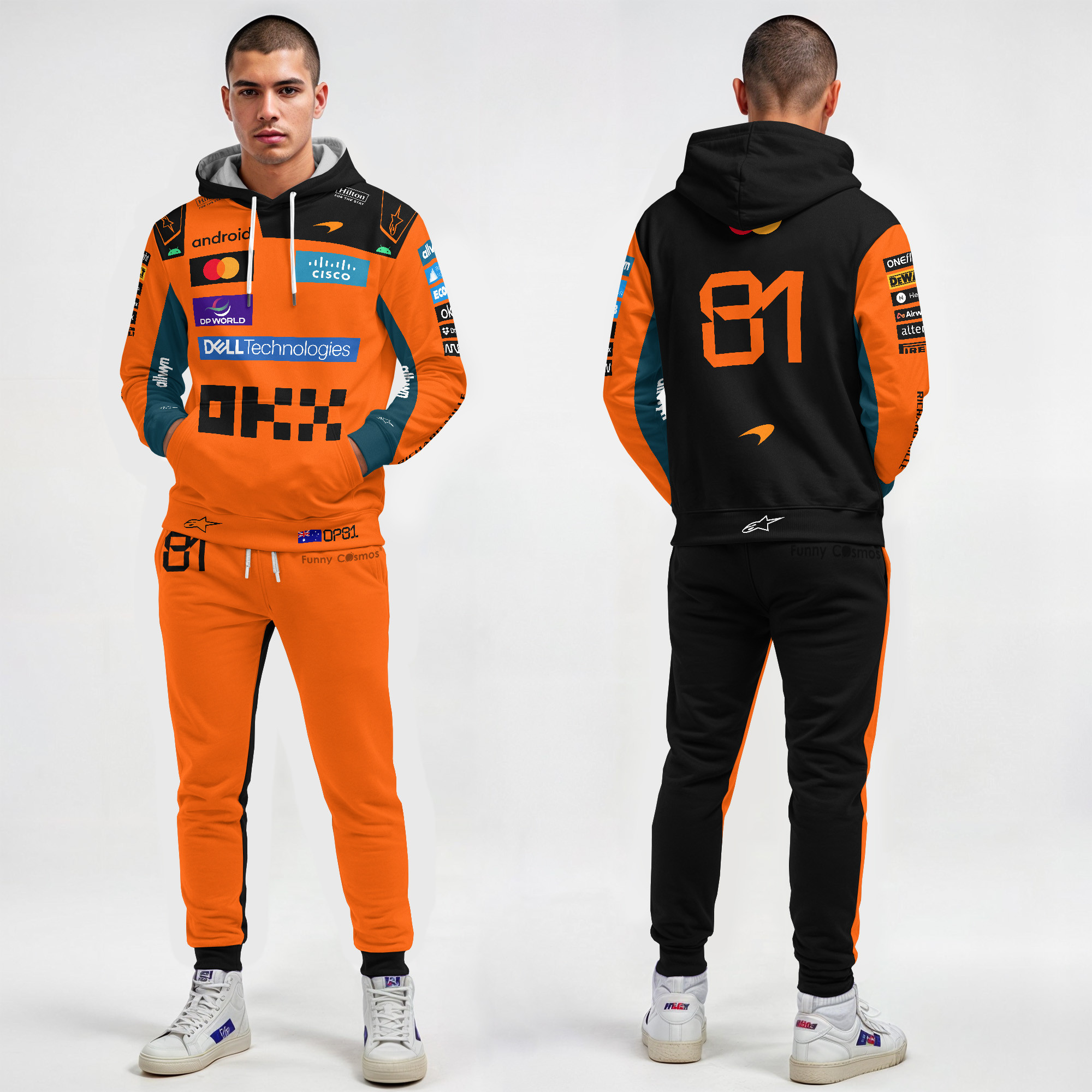
Oscar Piastri 2026 Papaya F1 Race Suit Style Apparel
Made to order 2-piece race suit style set, hoodie, or jacket with custom name options.
$89.95 USD
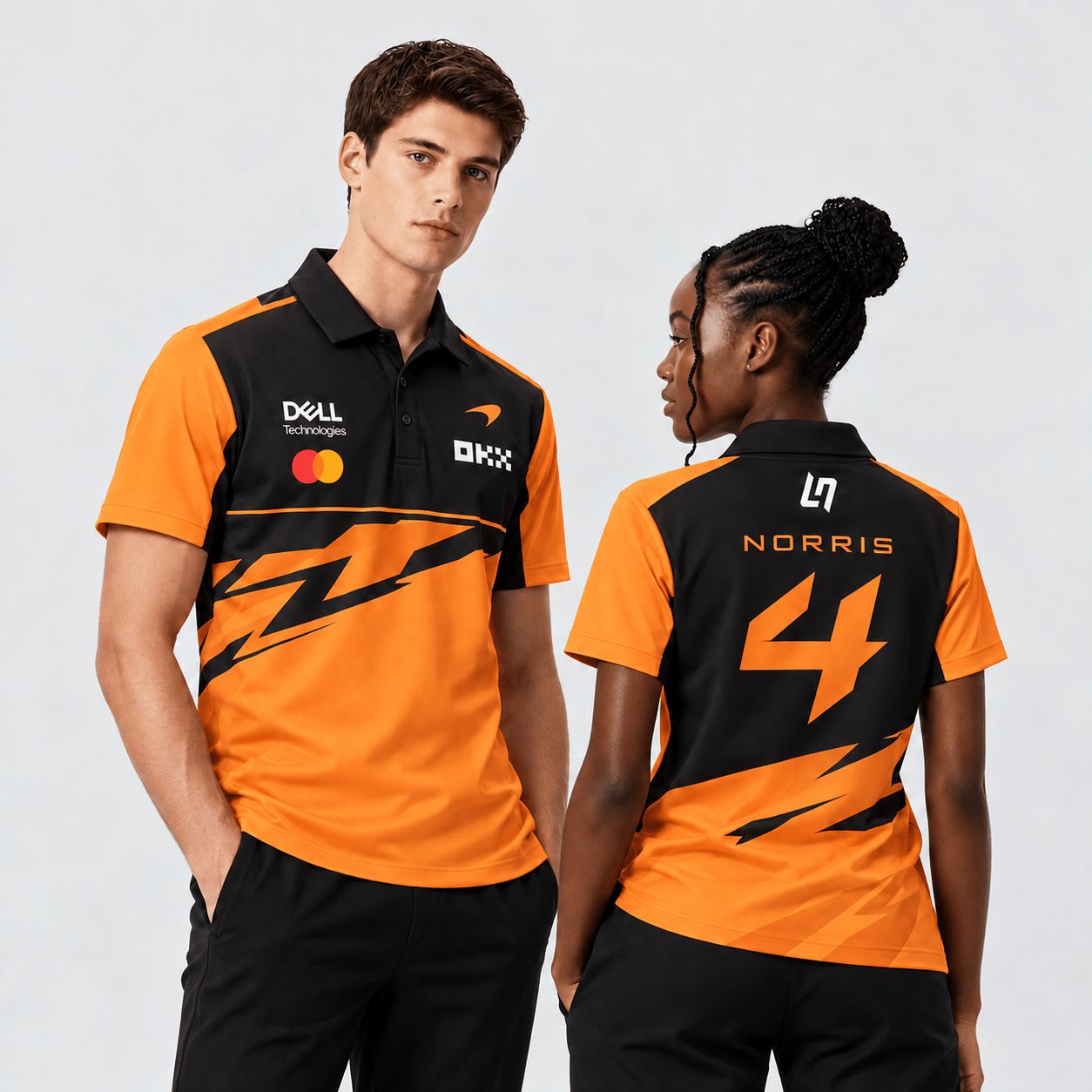
Last Lap Lando #4 Papaya Orange Team Custom Racing Polo Shirt
Breathable 230 GSM micro-pique fabric with custom number personalisation.
$35.95 USD

MCL Team 2026 Custom Racing Sherpa-Lined Fleece Zip Hoodie
Warm 250 GSM fleece with plush sherpa lining for cold night race viewing.
$69.95 USD
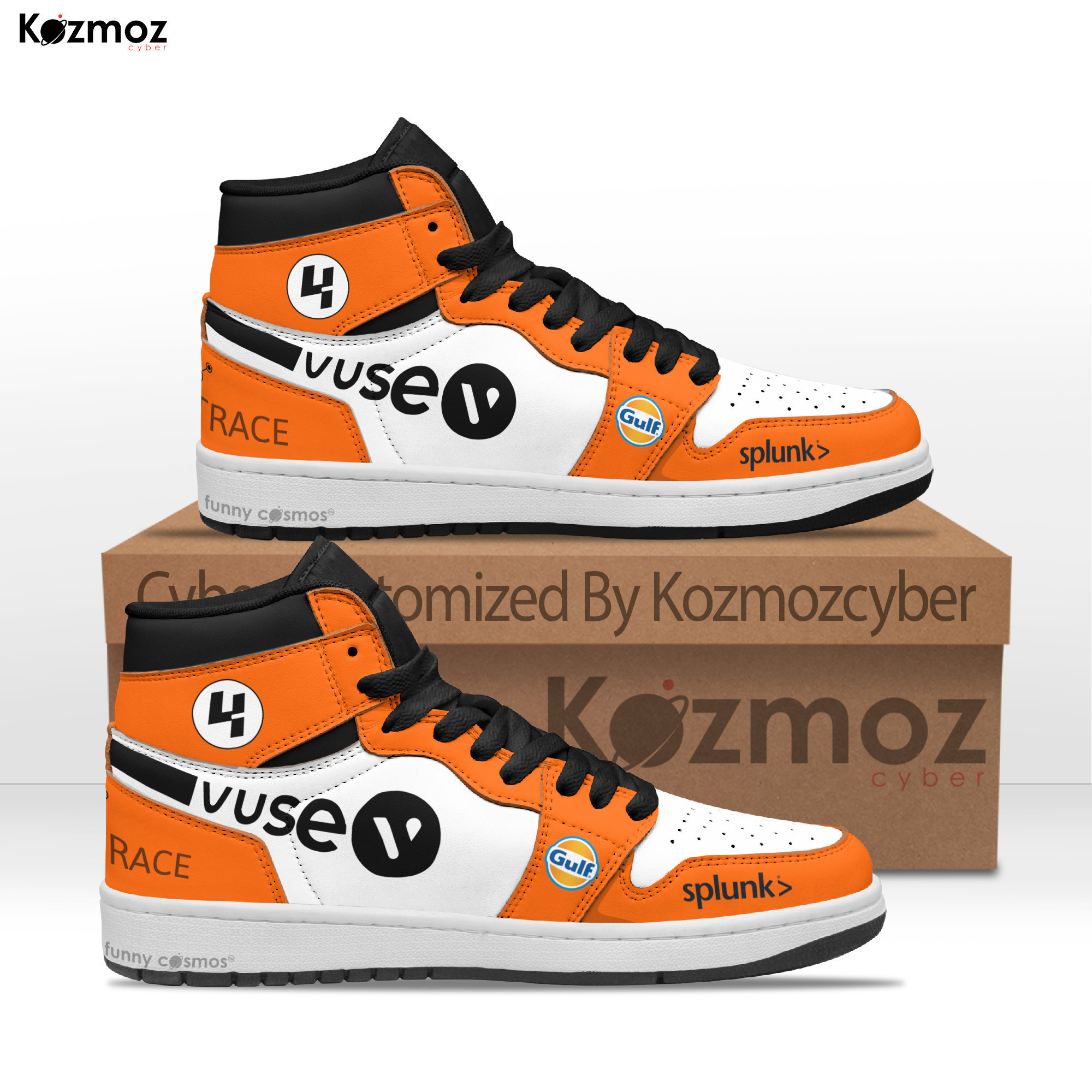
Lando Norris Custom Shoes Gulf Special Livery Racing Shoes
Custom racing sneakers with lightweight rubber traction and padded insoles.
$109.95 USD
Frequently Asked Questions
What upgrades is McLaren bringing to the Las Vegas Grand Prix?
McLaren arrived in Las Vegas with low-drag aerodynamic components, including a trimmed rear wing mainplane, a single-element beam wing, and revised floor edge scrolls. These parts follow the major upgrade package introduced in Brazil, giving drivers higher top speeds down the 1.9 kilometer Strip straight.
Why are late season upgrades valuable for next year?
Physical track testing on a bumpy street circuit provides empirical data that wind tunnels cannot match. Team Principal Andrea Stella confirmed that floor and wing correlation in Las Vegas confirms whether digital CFD models match real-world turbulence, directly shaping the 2027 car concept.
How do cold temperatures affect aerodynamics in Las Vegas?
Cold desert night air increases air density, which generates more downforce but creates higher aerodynamic drag. Low track temperatures make it hard to keep front tires in their operating window, forcing teams to balance straight-line speed against low-speed turn grip.
How long does apparel production take at Kozmozcyber?
Every garment is made to order with a production SLA of 4 to 5 calendar days for apparel and tumblers, or 10 to 12 business days for custom footwear prior to tracked international shipping. Orders include a 4-hour free cancellation window and free shipping on orders over $100. Contact support@kozmozcyber.com for order questions.
Conclusion: McLaren Late-Season Gamble Under Nevada Lights
Racing down the Las Vegas Strip requires technical discipline and aerodynamic compromise. While rival teams shift their attention to next year, McLaren continues to push physical parts onto the asphalt. Lando Norris and Oscar Piastri possess the equipment to fight Red Bull for third place in the standings. Readers planning their trackside outfits can review our Size Guide for tailored fits, or check the Shipping Timeline for holiday cutoffs. Standard shipping deadline arrives on November 20, while Express shipping runs until December 4.
Editorial & Merchandise Disclaimer: This article is an independent motorsport technical analysis published by Kozmozcyber. All apparel featured on kozmozcyber.store consists of independent fan artwork inspired by motorsport history and is not official, licensed, or endorsed merchandise of the FIA, Formula 1, McLaren, Red Bull Racing, or any racing team or manufacturer mentioned.
0 comment
Be the first to comment