

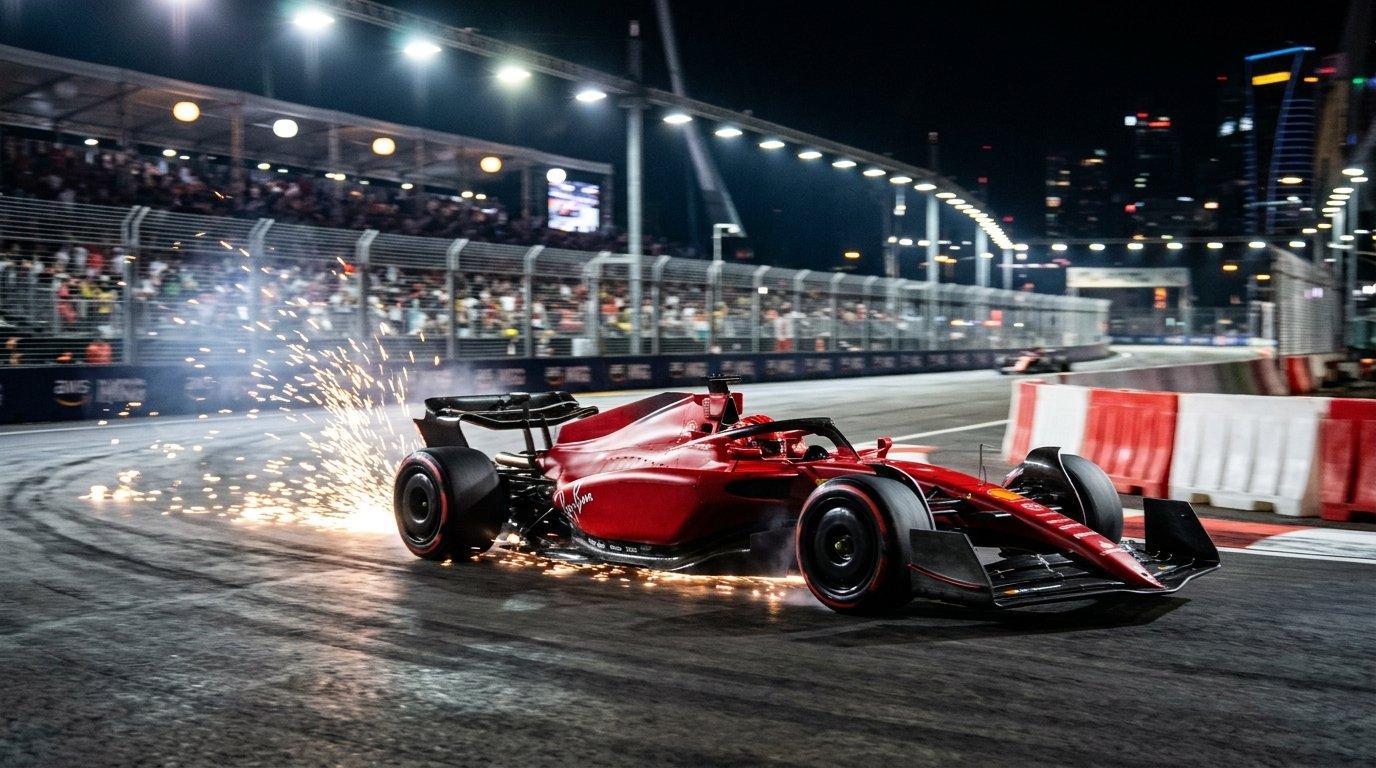
Ferrari faces a demanding aerodynamic and mechanical test as Formula 1 arrives at the 2026 Las Vegas Grand Prix. Official track telemetry from Formula 1 (Source) and reporting from Motorsport Network (Source) indicate that cars reach speeds exceeding 350 km/h along the 1.9 kilometer straight down Las Vegas Boulevard. For Scuderia Ferrari Team Principal Fred Vasseur, this high-speed venue highlights the ongoing horsepower gap in their internal combustion engine. Charles Leclerc and Lewis Hamilton must navigate an unforgiving trade between top speed on the Strip and tire temperature in chilly desert corners.
Quick answer: Ferrari faces an estimated 5.6 km/h top-speed deficit in straight-line speed traps compared to benchmark Mercedes power units during the 2026 season. On the 1.9 kilometer Las Vegas Boulevard straight, Scuderia Ferrari must trim rear wing downforce to stay competitive at high speed, while risking cold tire graining through the slow 90-degree corners where the SF-26 chassis normally excels.
Key Takeaways
- Top Speed Deficit: Scuderia Ferrari trails benchmark Mercedes engines by approximately 5.6 km/h in high-speed trap measurements across the 2026 season.
- Vasseur Admission: Fred Vasseur confirmed the deficit comes from internal combustion engine horsepower rather than hybrid battery deployment strategies.
- Strip Circuit Layout: The 1.9 kilometer flat-out blast down Las Vegas Boulevard places top-end power at a higher premium than traditional European tracks.
- Aero Dilemma: Trimming wing downforce helps Ferrari defend on straights but hurts tire warming through cold 12 degree Celsius desert temperatures.
- Matching Tribute Gear: Explore fan-designed scarlet tribute apparel in our Formula 1 Tribute Collection and Charles Leclerc Collection.
1. Why Ferrari Faces a Straight-Line Speed Deficit in 2026
Ferrari built an agile chassis for 2026 that handles curbs with composure and generates great traction out of slow corners. Yet straight-line speed traps tell a different story. In qualifying sessions at Monza, the SF-26 registered top speeds roughly 5.6 km/h behind Mercedes-powered entries. That margin looks small on paper. Over a full racing lap with multiple long straights, it forces drivers into defensive positions.
Internal Combustion Horsepower vs Electrical Energy Deployment
Some paddock analysts wondered whether Ferrari suffered from sub-optimal electrical clipping along straights. Fred Vasseur addressed that theory directly in recent media debriefs. He clarified that energy deployment curves on the SF-26 match rival benchmarks closely. The shortfall comes from raw thermal efficiency and internal combustion output. Trying to compensate by dumping electrical power early on straights drains the battery too quickly, leaving the car vulnerable before the braking zone.
The Limits of FIA ADUO Development Tokens
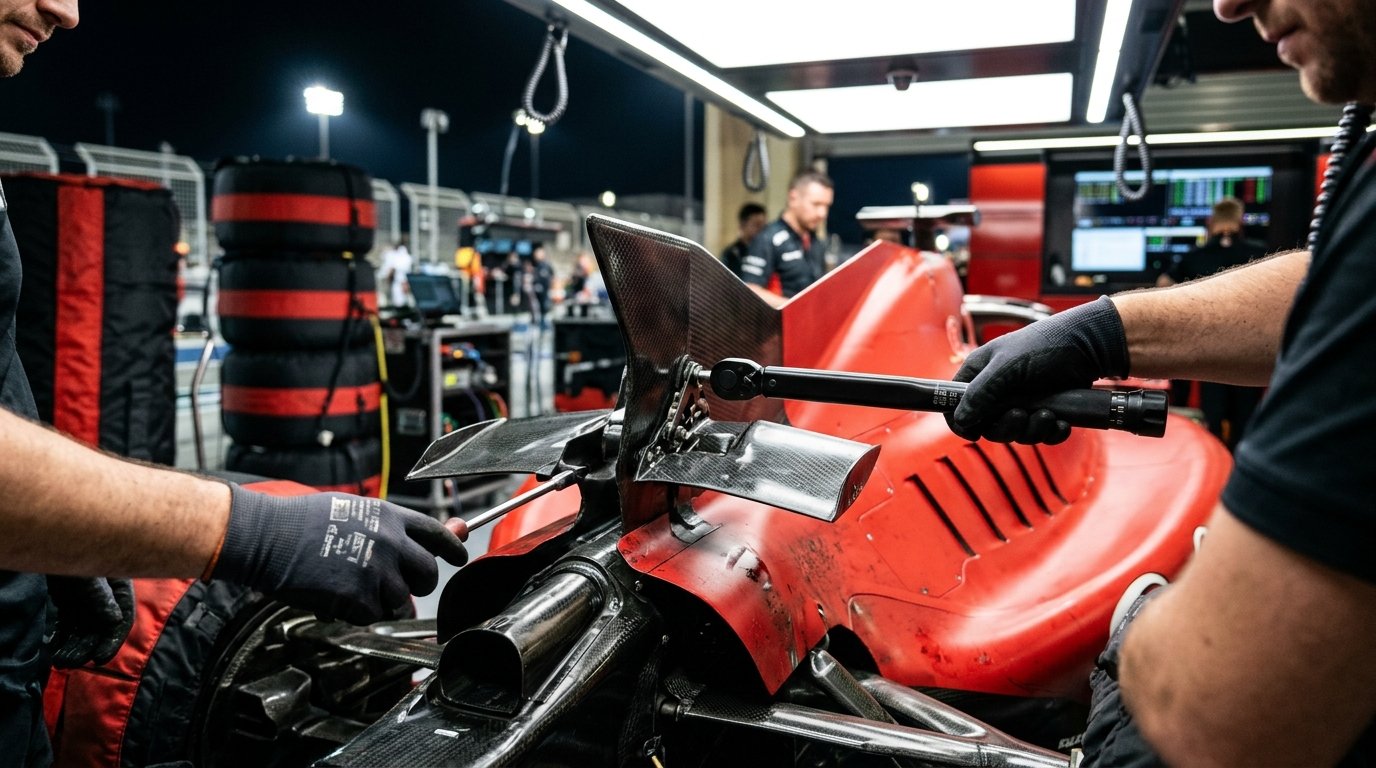
Under the FIA regulatory framework, manufacturers trailing benchmark engines receive Additional Development and Upgrade Opportunities (ADUO). Ferrari introduced a revised turbocharger and combustion update earlier in the season. Vasseur noted that while these updates delivered measurable gains, they could not wipe out a fundamental architectural horsepower gap during a single development cycle. Redesigning engine castings and cylinder heads requires extensive dyno validation and falls under strict financial cost limits.
2. How the Las Vegas Strip Circuit Exposes Power Gaps
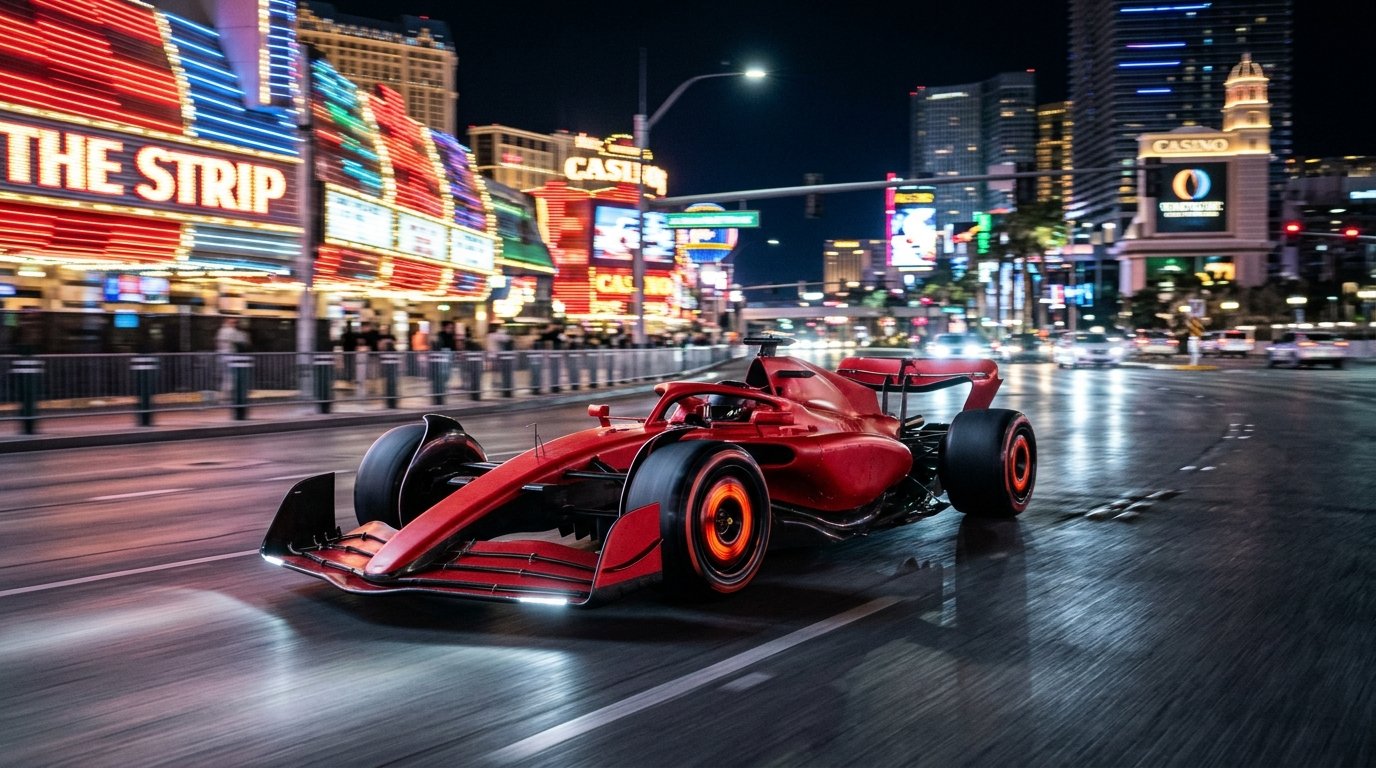
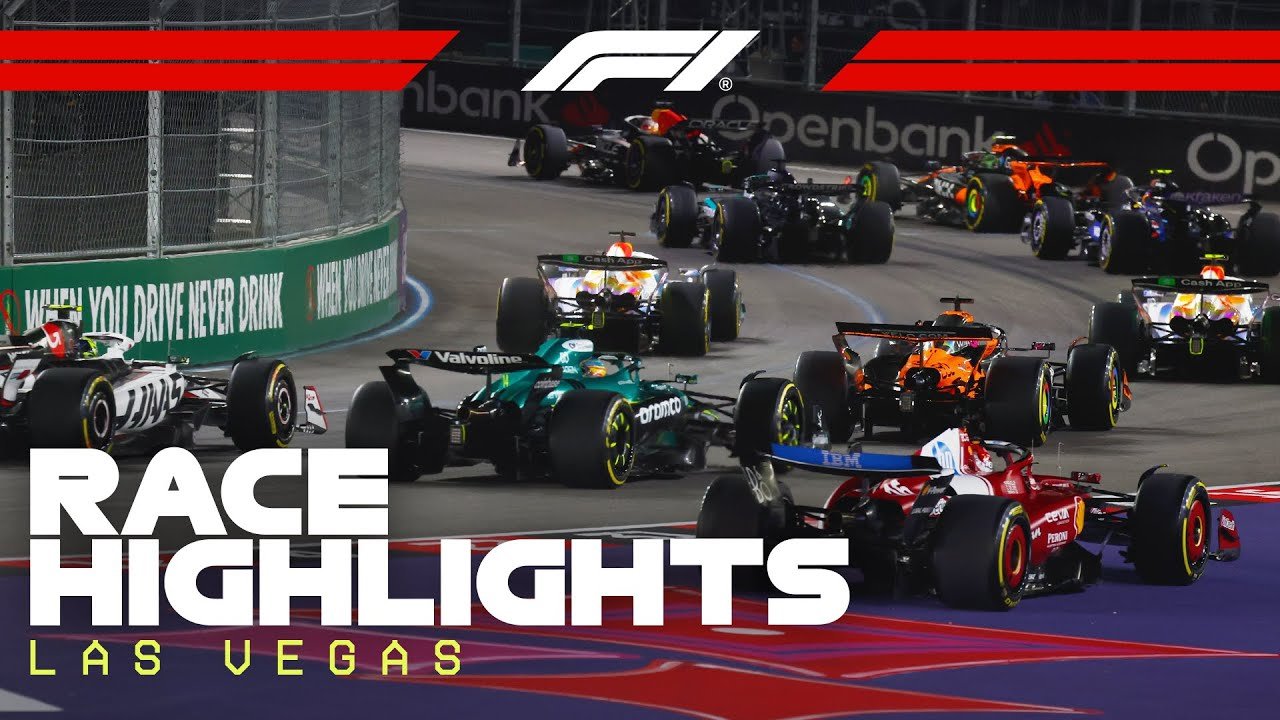
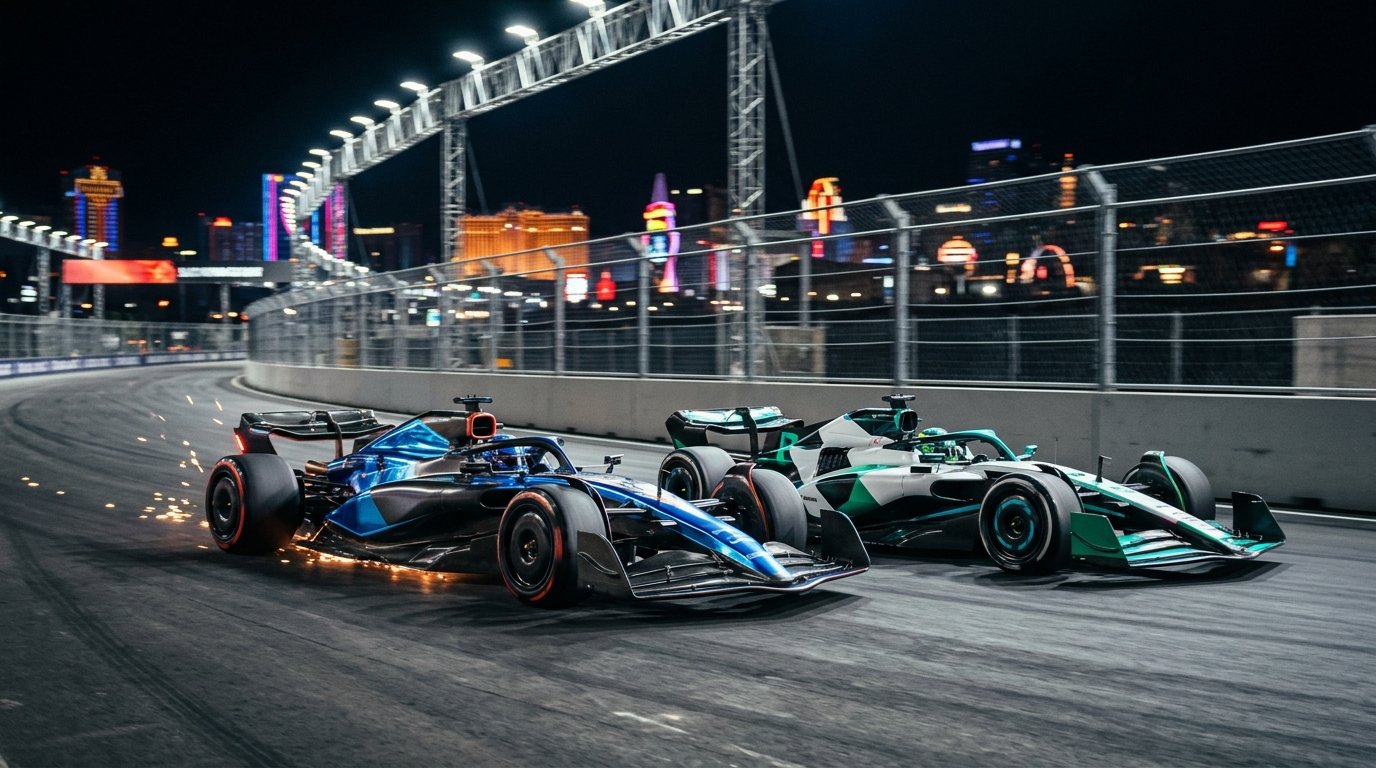
The Las Vegas Strip Circuit runs counter-clockwise over 6.201 kilometers with 17 turns. Its defining characteristic is the 1.9 kilometer full-throttle blast down Las Vegas Boulevard. Drivers stay pinned in eighth gear for nearly twenty seconds straight before stomping the carbon brakes at Turn 14.
The 1.9 Kilometer Flat-Out Blast Down Las Vegas Boulevard
When cars reach 340 km/h, aerodynamic drag squares with speed. Every missing kilowatt of combustion output costs precious fractions of a second. At Monza, high-speed chicanes break up long straights. In Las Vegas, the continuous straight allows rival cars with higher terminal velocity to build closing speed effortlessly. Ferrari drivers know that if a Mercedes or Red Bull enters their DRS window along Koval Lane or the Strip, defending the inside line becomes very difficult.
Speed trap figures at the end of the Strip highlight Ferrari trailing benchmark power units by 5.6 km/h, forcing engineers to consider aggressive wing angle cuts.
3. The SF-26 Aero Dilemma: Downforce vs Cold Tires
Ferrari engineers face a difficult choice. They could trim the rear wing angle and reduce gurney flap depth to recover straight-line velocity. That adjustment lowers aerodynamic drag and brings terminal speed closer to rival cars. However, doing so creates an immediate penalty in the corners.
The Las Vegas race runs late at night in November. Track temperatures regularly drop between 10 and 15 degrees Celsius. In these chilly conditions, Pirelli tires require sustained aerodynamic load to stay within their operating temperature window. When a car trims wing angle too aggressively, the tires slide across the asphalt in low-speed corners. This sliding leads to cold surface graining. Front tires lose grip rapidly, creating severe understeer through Turns 7, 8, and the slow chicane leading back to the pit straight.
| Team & Chassis | Power Unit Supplier | Straight-Line Delta | Vegas Wing Setup | Cold Tire Warm-Up |
|---|---|---|---|---|
| Mercedes-AMG W17 | Mercedes High Performance | 0.0 km/h (Benchmark) | Medium-low downforce | High front axle generation |
| Red Bull Racing RB22 | Red Bull Ford Powertrains | -1.4 km/h | Ultra-efficient beam wing | Balanced carcass heat |
| Scuderia Ferrari SF-26 | Ferrari 066/12 | -5.6 km/h | Spoon-profile low drag wing | Prone to front graining |
| McLaren MCL40 | Mercedes High Performance | -0.8 km/h | Low downforce main plane | Strong lateral grip |
Custom Motorsport Tribute Gear • Made to Order in 4 to 5 Calendar Days
Heading to Las Vegas or Cheering the Scuderia from Home?
Get race-weekend ready with custom-printed racing hoodies, sherpa pullovers, race suit style apparel, and breathable paddock polos. Order As shown ($0), add your Custom Name & Racing Number (+$2.50 flat), or request a Custom Design (+$15.00 flat with up to 3 mockup revision rounds). Crew savings apply automatically at checkout: 10% off 2 items, 15% off 3 items, or 20% off 4+ items, plus Free Worldwide Shipping on orders over $100.
4. Best Practices for Trackside Layering in Cold Night Climates
Attending a late-night street race in the Mojave Desert requires different preparation than a sunny afternoon at Monza or Silverstone. Once the desert sun sets, ambient temperatures plunge quickly toward single digits. High-speed desert gusts through city canyons amplify the chill for fans sitting in uncovered grandstands.
Layering Strategies for Cold Grandstand Evenings
- Start with a Breathable Base: Wear a 230 GSM micro-pique polo or technical undershirt close to your skin to manage perspiration during crowded paddock walks.
- Add Mid-Layer Insulation: Layer a 250 GSM brushed fleece hoodie or 320 GSM sherpa-lined zip pullover to trap body heat against desert breezes.
- Outer Wind Protection: Complete your outfit with a quilted bomber jacket or race suit style apparel top to block wind exposure from the Strip.
Garment Care Mistakes to Avoid with Sublimated Apparel
- Avoid High-Heat Tumble Drying: High dryer temperatures can damage polyester elasticity and mute deep scarlet dye. Always wash inside out in cold water and hang dry.
- Do Not Use Fabric Softeners: Softening chemicals coat synthetic fibers and degrade moisture-wicking properties on breathable paddock polo shirts.
5. Contextual Gear Picks: Wear Scuderia Red at the Strip
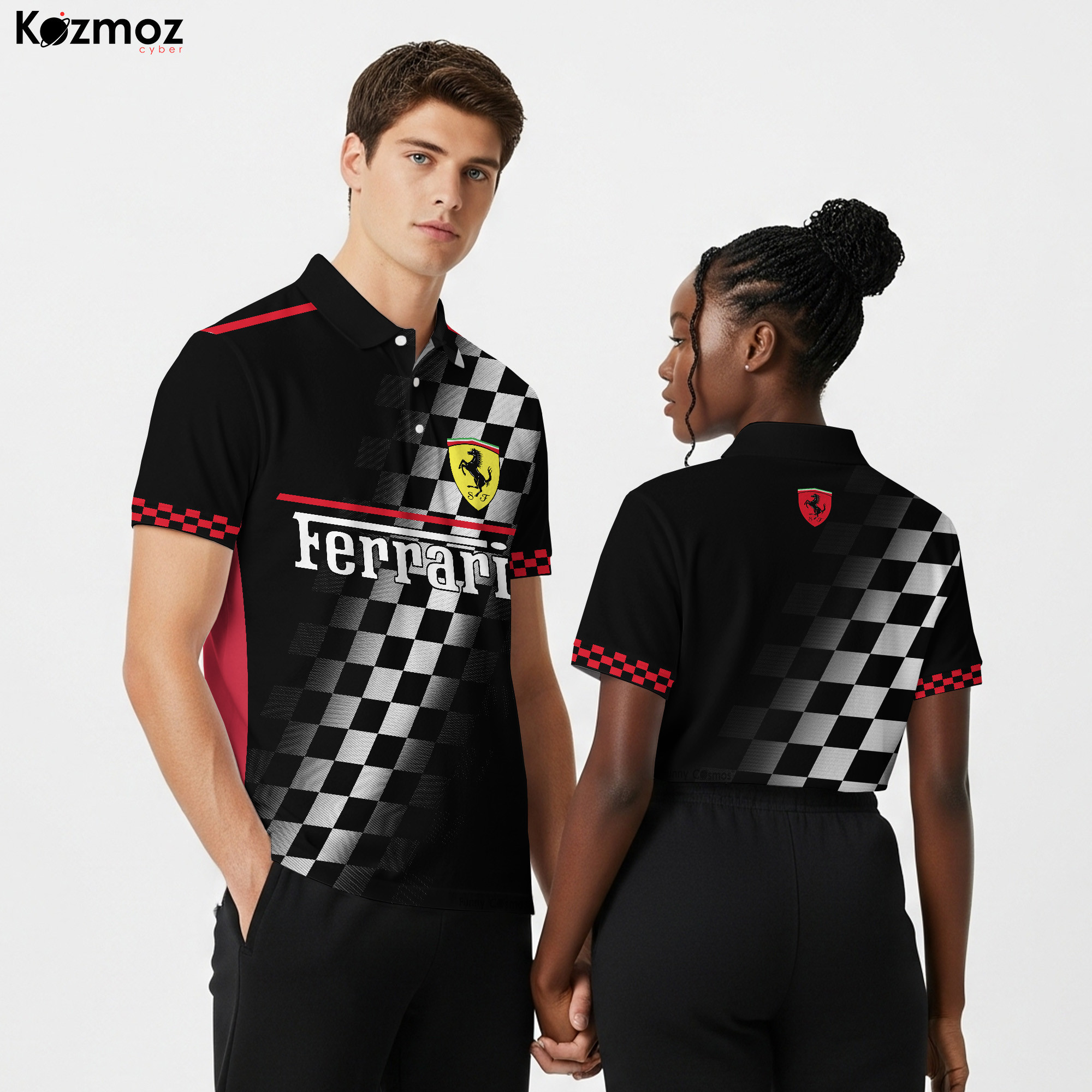
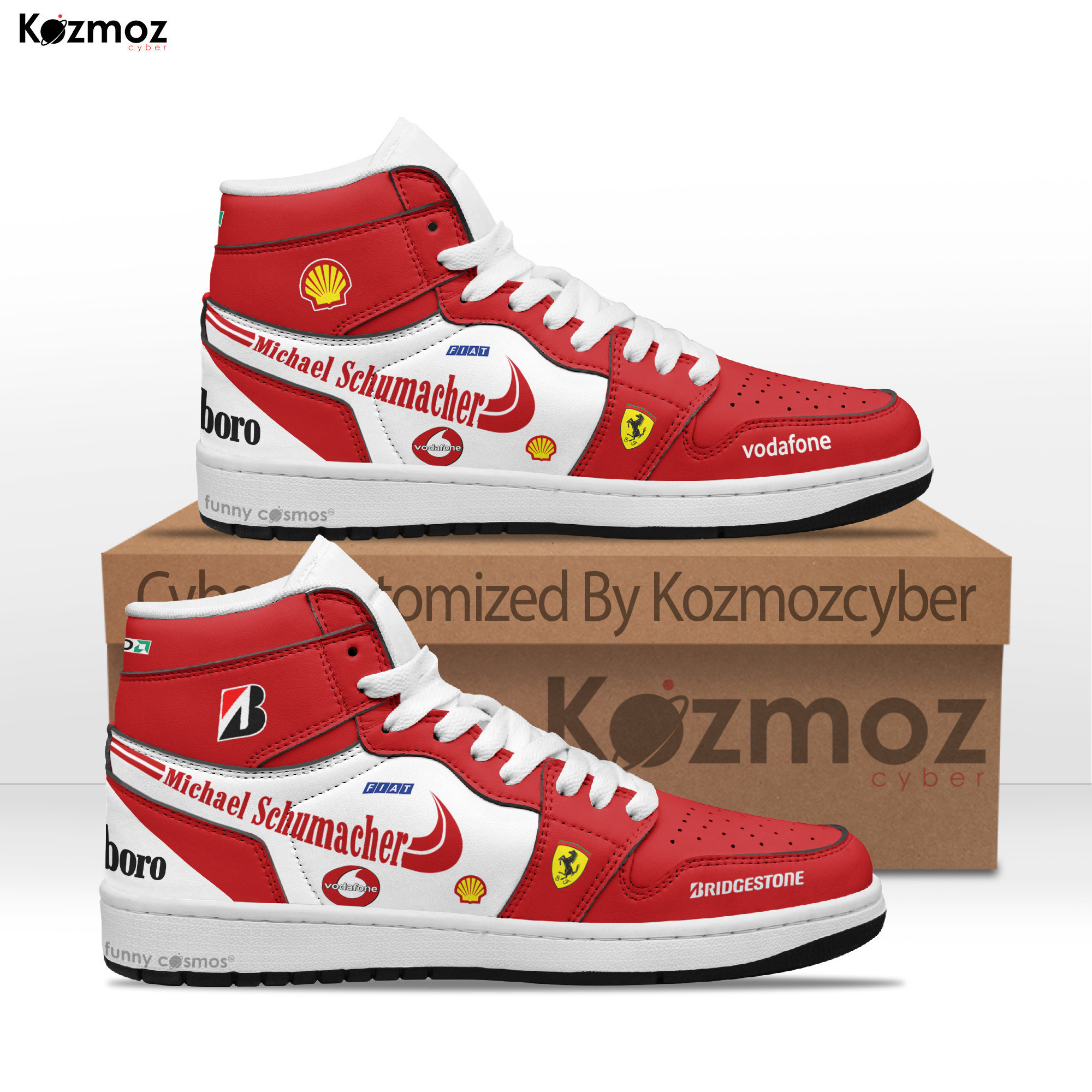
Explore our curated fan tribute collection celebrating Italian Grand Prix heritage and modern street circuit racing:


Explore Related Formula 1 Guides & Categories:
- Grand Prix Event Schedule: Las Vegas Grand Prix 2026 Schedule: Strip Times, Cold Tires & Stakes
- Formula 1 Collection: Formula 1 Fan-Art Apparel & Gear
- Driver Directory: Kozmozcyber Racing Team & Driver Directory
- First-Time Shopper Guide: New Customer Offers and Ordering Guide
Frequently Asked Questions
What is the top speed of the Ferrari F1 car?
The Ferrari SF-26 reaches top speeds around 346 km/h in straight-line speed traps on high-speed circuits. Benchmark Mercedes-powered cars reach speeds near 351.8 km/h on comparable wing angles, leaving Ferrari with an estimated 5.6 km/h gap at terminal velocity.
Why does Ferrari have a straight-line speed deficit in 2026?
Team Principal Fred Vasseur confirmed that the shortfall stems from internal combustion engine horsepower rather than battery energy deployment. Redesigning core engine architecture requires new component castings and testing cycles that take extensive time under cost-cap restrictions.
How does the Las Vegas Strip Circuit test Ferrari's SF-26?
The track features a 1.9 kilometer straight down Las Vegas Boulevard where top speed is critical for defending and overtaking. Trimming rear wing downforce helps top speed but increases the risk of cold tire graining in 12 degree Celsius desert evening air.
How long does apparel production take at Kozmozcyber?
Every garment is made to order with a production SLA of 4 to 5 calendar days for apparel and tumblers, or 10 to 12 business days for custom footwear. Orders include a 4-hour free cancellation window and free shipping on orders over $100. Contact support@kozmozcyber.com for order questions.
Conclusion & Paddock Summary
The 2026 Las Vegas Grand Prix highlights the ongoing technical challenge facing Scuderia Ferrari. While the SF-26 chassis offers strong low-speed traction, the 1.9 kilometer Strip straight demands raw horsepower that Fred Vasseur acknowledges remains an uphill fight. Whether Charles Leclerc and Lewis Hamilton can overcome that deficit comes down to setup balance and managing Pirelli tire temperatures under desert floodlights.
Editorial & Merchandise Disclaimer: This article is an independent motorsport technical analysis published by Kozmozcyber. All apparel featured on kozmozcyber.store consists of independent fan artwork inspired by motorsport history and is not official, licensed, or endorsed merchandise of the FIA, Formula 1, Scuderia Ferrari, or any racing team or manufacturer mentioned.
0 comment
Be the first to comment